
Chris Killip
fotograaf
Christopher David Killip (1946–2020) was een vooraanstaande Manx fotograaf die bekend stond om zijn evocatieve zwart-witbeelden van mensen en plekken in het Verenigd Koninkrijk. Hij begon zijn carrière als assistent van de reclamefotograaf Adrian Flowers in Londen voordat hij in 1969 freelance ging werken. In 1975 ontving hij een fellowship van Northern Arts om het noordoosten van Engeland te fotograferen, wat leidde tot zijn baanbrekende werk 'In Flagrante' (1988), waarin de industriële neergang en de arbeidersgemeenschappen van Tyneside tijdens de jaren 70 en 80 werden gedocumenteerd. Killip was van 1991 tot 2017 professor Visual and Environmental Studies aan Harvard University. Zijn werk maakt deel uit van belangrijke collecties, waaronder die van de Tate, MoMA en het Victoria and Albert Museum.[1,2,4,5,6,7,9,10,11,12,13,14,15,16,17,18,19,20,21,22,23,24,25,26,27,28,29,30,31,32,33,34,35,36,37]
Chris Killip: Deindustrialisation, Community, and the British Photobook
An in-depth, source-grounded biography of Manx documentary photographer Chris Killip (1946–2020), tracing his early work on the Isle of Man, his fifteen-year documentation of deindustrialisation in north-east England and the making of In Flagrante (1988), his 1989 factory series Pirelli Work (2006), and his later teaching at Harvard and archival monographs.
Christopher David Killip (11 July 1946 – 13 October 2020) was a Manx documentary photographer and educator whose black-and-white studies of working-class communities in the north-east of England during the 1970s and 1980s reshaped postwar British photography. His identity is established across international authority records recorded in Wikidata Q1077407—including the New York Public Library’s Photographers’ Identities Catalog (PIC ID 313053), Getty ULAN (500037054), VIAF (91949564), ISNI (0000 0000 7830 9180), and RKDartists (376053)—and by museum holdings at Tate, the J. Paul Getty Museum, the Victoria and Albert Museum, the Museum of Modern Art, and the Stedelijk Museum Amsterdam (Chris Killip Archive).
Early formation and the Isle of Man (1946–1974)
Born in Douglas, Isle of Man, on 11 July 1946 to Molly and Alan Killip, who ran the Highlander pub in Greeba, Killip left Douglas High School at sixteen with a single O-level in art and worked as a trainee hotel manager (The Guardian obituary). Encountering Henri Cartier-Bresson’s Rue Mouffetard, Paris (1954) in an issue of Paris Match while looking for cycling photographs, he resolved to become a photographer. After working as a summer beach photographer on the island in 1964 to fund his passage to London, he spent five years as a studio assistant to commercial and advertising photographers—beginning in October 1964 with Adrian Flowers—before working briefly as a freelance commercial photographer (The Guardian; David Campany).
A 1969 visit to the Museum of Modern Art in New York, where he studied original prints by Paul Strand, Walker Evans, Eugène Atget, August Sander, and Bill Brandt, prompted Killip to abandon commercial assignments (The Guardian; David Campany). Returning to the Isle of Man between 1970 and 1973, he tended bar at night in his father’s pub and photographed by day with a large-format camera as the island’s agricultural and fishing economy gave way to its new status as a financial tax haven (The Guardian; Magnum Photos). A 1971 commission from New York gallerist Lee Witkin for a limited-edition portfolio of his Isle of Man prints, followed by an Arts Council of Great Britain commission in 1974 to photograph Huddersfield and Bury St Edmunds (Two Views, Two Cities), enabled him to sustain an independent documentary practice (The Guardian). The Manx work appeared as his first monograph, Isle of Man: A Book about the Manx (London: Arts Council of Great Britain / Zwemmer, 1980, text by John Berger and Tony Ray-Jones’s circle), later expanded in Isle of Man Revisited (Göttingen: Steidl, 2015) (Chris Killip Bibliography).
Tyneside, the Side Gallery, and In Flagrante (1975–1988)
In 1975 Killip received a two-year fellowship from Northern Arts to photograph the north-east of England, settling in Newcastle and later in a flat in Bill Quay, Gateshead, where he lived and worked for the next fifteen years (The Guardian). Together with members of the Amber Film and Photography Collective, he co-founded the Side Gallery in Newcastle in 1977 and served as its first director and curator for two years, organizing exhibitions of August Sander, Lewis Hine, Berenice Abbott, Markéta Luskačová, and Graham Smith (The Guardian; Magnum Photos).
Across the late 1970s and 1980s, as shipbuilding, coal mining, and steelmaking collapsed across Tyneside, Wearside, Northumberland, and North Yorkshire under Margaret Thatcher’s government, Killip embedded himself in communities living through rapid deindustrialisation (J. Paul Getty Museum; Liz Jobey, The Guardian). Working primarily with a 4×5-inch view camera—sometimes supplemented with daylight flash—he built sustained personal relationships before making photographs (The Guardian). Among his deepest sustained commitments were two coastal communities:
- Lynemouth, Northumberland (Seacoal, 1976–1984): Between 1982 and 1984 Killip lived in a caravan at Seacoal Camp on Lynemouth beach alongside families and Travellers who earned a precarious living with horse-drawn carts gathering waste coal washed ashore from nearby Ellington Colliery (The Guardian; J. Paul Getty Museum).
- Skinningrove, North Yorkshire (1980–1984): In an isolated fishing village nestled in a steep valley on the North Yorkshire coast, Killip spent years photographing young fishermen tending cobles, repairing nets, and mourning colleagues lost at sea, including the 1983 portrait Simon Being Taken to Sea for the First Time Since His Father Drowned, Skinningrove (The Guardian; J. Paul Getty Museum).
In 1985 Killip and Graham Smith presented Another Country: Photographs of the North East of England at the Serpentine Gallery in London (The Guardian). Three years later, approached by publisher David Godwin at the literary press Secker & Warburg, Killip spent six months sequencing fifty photographs from his 1973–1985 northern England work with editor Mark Holborn and designer Peter Dyer (David Campany; J. Paul Getty Museum). Published in 1988 in simultaneous hardcover (ISBN 0-436-23358-4) and paperback (ISBN 0-436-23356-8) editions to coincide with a solo exhibition at the Victoria and Albert Museum, In Flagrante (London: Secker & Warburg, 1988; French edition Vague à l’âme, Paris: Nathan, 1988) paired Killip’s uncaptioned plates with an essay by John Berger and Sylvia Grant and opened with Killip’s statement that the book was a “subjective” fiction about what had happened to England (David Campany; Magnum Photos). Widely regarded as a watershed of twentieth-century photobook history, In Flagrante was later studied in Jeffrey Ladd’s Books on Books 4: Chris Killip, In Flagrante (New York: Errata Editions, 2009), re-edited with uncropped plates in In Flagrante Two (Göttingen: Steidl, 2015/2016), and examined through original maquettes and contact sheets in the 2017 J. Paul Getty Museum exhibition Now Then: Chris Killip and the Making of In Flagrante.
Pirelli Work, Harvard, and later monographs (1989–2020)
In 1989 Killip received the Henri Cartier-Bresson Award and accepted a commission from Pirelli UK to photograph the workforce at its tyre factory in Burton-on-Trent, Staffordshire (The Guardian; Tate). Mounting a 4×5 camera on a tripod inside the noisy, heat-filled plant and triggering three concealed flash heads with an infrared transmitter, Killip photographed tyre builders and process workers absorbed in heavy manual labour just as computerised automation was beginning to transform the factory floor (Tate; David Campany). First exhibited as Working at Pirelli at the Victoria and Albert Museum in 1990, the series was published seventeen years later as Pirelli Work (Göttingen: Steidl, 2006/2007, ISBN 3-86521-317-0 / 978-3-86930-961-3), accompanied by Clive Dilnot’s essay on the project’s industrial and formal history (Chris Killip Bibliography; David Campany).
In 1991 Killip moved to Cambridge, Massachusetts, as a visiting lecturer in the Department of Visual and Environmental Studies at Harvard University, becoming a tenured professor in 1994, serving as department chair from 1994 to 1998, and teaching there until his retirement in December 2017 (Chris Killip Archive; Magnum Photos). Between 1993 and 2005 he made annual summer journeys to the west of Ireland—photographing Catholic pilgrimages at Croagh Patrick in County Mayo and Máméan in County Galway alongside colour views of the surrounding countryside—which appeared in Here Comes Everybody: Chris Killip’s Irish Photographs (London: Thames & Hudson, 2009) (Liz Jobey, The Guardian).
During his final decade Killip worked closely with Gerhard Steidl, Café Royal Books, Pony Design, and his son Matthew Killip to bring unseen or previously uncollected bodies of 1970s and 1980s work into print (The Guardian; Magnum Photos). Major publications from this period include Seacoal (Steidl, 2011), the Museum Folkwang retrospective volume Arbeit / Work (Steidl, 2012, shortlisted for the 2013 Deutsche Börse Photography Prize), the four 2018 tabloid zines co-published with Pony (The Station, The Last Ships, Skinningrove, and Portraits—copies of Skinningrove were hand-delivered by Killip to residents of the village), and the hardcover monograph The Station (Steidl, 2020), documenting the anarcho-punk music venue in Gateshead that he had photographed in 1985 (The Guardian; Chris Killip Bibliography). Awarded the Dr. Erich Salomon Award by the German Society for Photography shortly before his death, Killip died of lung cancer in Cambridge, Massachusetts, on 13 October 2020 at the age of seventy-four (The Guardian). Posthumous publications prepared from his edits include the Thames & Hudson retrospective monograph Chris Killip 1946–2020 (2022) and Skinningrove (Stanley/Barker, 2024) (Chris Killip Bibliography; Magnum Photos).
Sources
- Wikidata Q1077407: Chris Killip (PIC 313053, ULAN 500037054, VIAF 91949564, RKD 376053)
- NYPL Photographers’ Identities Catalog: Chris Killip (PIC 313053)
- Tate: Chris Killip (1946–2020)
- J. Paul Getty Museum: Now Then: Chris Killip and the Making of In Flagrante (2017)
- Fondation Henri Cartier-Bresson: Chris Killip, Lauréat 1989
- Sean O’Hagan, Chris Killip obituary, The Guardian (16 October 2020)
- Liz Jobey, Photographer Chris Killip: return to a ritual landscape, The Guardian (20 April 2009)
- David Campany, The Time of Chris Killip (in Arbeit / Work, Museum Folkwang / Steidl, 2012)
- Diane Smyth, Chris Killip’s Enduring Connection With the People he Photographed, Magnum Photos (10 February 2023)
- Chris Killip Official Archive & Bibliography
Boeken
-
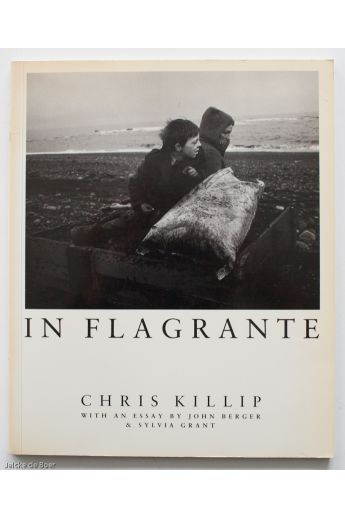 In flagrante€ 220,00
-
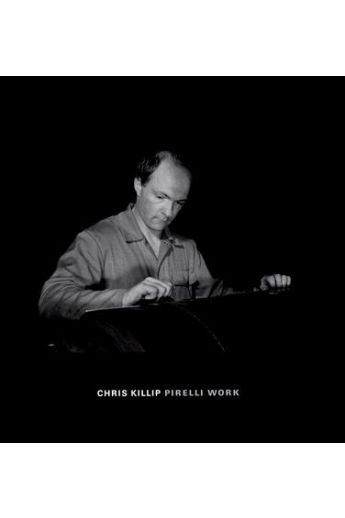 Pirelli work€ 20,00


Werk van Chris Killip
- 1988 In Flagrante First published in 1988; includes text by John Berger and Sylvia Grant.
- 1980 Isle of Man: A Book about the Manx With text by Killip and John Berger.
- 2001 Chris Killip 55 Text by Gerry Badger.
- 2007 Pirelli Work Photographs of a tyre factory in Burton.
- 2009 Here Comes Everybody: Chris Killip's Irish Photographs Photographs of pilgrimages and rural scenes in Ireland.
- 2011 Seacoal
- 2012 Arbeit / Work A retrospective. Texts by Killip, David Campany and Ute Eskildsen.
- 2015 Isle of Man Revisited Second edition of Isle of Man: A Book about the Manx.
- 2016 In Flagrante Two Second edition of the photographs from In Flagrante.
- 2020 The Station
- 2022 Chris Killip A retrospective.
- 2024 Skinningrove
Tentoonstellingen
- Two Views, Two Cities. Huddersfield and Bury St Edmunds
- 1984 Seacoal
- 1985 Another Country
- 1988 In Flagrante
- 1990 Working at Pirelli
- 1991 Chris Killip Retrospective
- 1996 The Last Art Show
- 1997 Chris Killip Photographs 1971–96
- 2000 Chris Killip: Sixty Photographs
- 2012 Arbeit/Work
- 2012 What Happened / Great Britain 1970–1990
- 2017 Now Then: Chris Killip and the making of In Flagrante
- 2020 The Last Ships
- 1989 The Art of Photography, 1839–1989
- 2006 In the Face of History: European Photographers in the 20th Century
- 2008 No Such Thing as Society: Photography in Britain 1968–1987
- 2010 Facts of Life / British Documentary Photography
Prijzen
- 1989 Henri Cartier-Bresson Award
- 2013 Deutsche Börse Photography Foundation Prize (Shortlisted)
- 2020 Dr. Erich Salomon Award
Referenties
- Sean O'Hagan. Chris Killip obituary. The Guardian. 2020 link
- Sean O'Hagan. Chris Killip, hard-hitting photographer of Britain's working class, dies aged 74. The Guardian. 2020 link
- Justin Carville. Chris Killip. Encyclopedia of Twentieth Century Photography. Routledge. 2006
- Tom Seymour. British photographer Chris Killip remembered after battle with cancer. The Art Newspaper. 2020 link
- Chris Killip: 'Remarkable' photographer dies aged 74. BBC News. 2020 link
- Martin Parr; Gerry Badger. The Photobook: A History. Phaidon. 2006
- Clive Dilnot. Chris Killip's Portraits of the Pirelli Workforce. Pirelli Work
- Robert Ayers. One of the greatest photography books ever published – Chris Killip's In Flagrante. askyfilledwithshootingstars.com. 2009 link
- Chris Killip. What Happened. Pirelli Work
- Liz Jobey. Photographer Chris Killip: return to a ritual landscape. The Guardian. 2009 link
- Sean O'Hagan. Moshpit mayhem: The northern club where punks rampaged to Hellbastard. The Guardian. 2020 link
- Ayla Angelos. An exclusive chat with photographer Chris Killip and his son. It's Nice That. 2020 link
- Ayla Angelos. Markéta Luskačová's Chiswick Women's Aid 1976–77 is finally brought to light after 44 years. It's Nice That. 2020 link
- Chris Killip 55. Phaidon Press. 2001
- Mark Haworth-Booth. Chris Killip: Recognition for a great photographer. The Guardian. 2020 link
- What Happened / Great Britain 1970–1990. Le Bal. 2012 link
- Now Then: Chris Killip and the Making of In Flagrante. J. Paul Getty Museum. 2017 link
- Diane Smyth. Now Then: Chris Killip and the Making of In Flagrante. British Journal of Photography. 2017 link
- Carolina A. Miranda. Seven photos, seven stories: Chris Killip on capturing the declining industrial towns of England in the '70s and '80s. Los Angeles Times. 2017 link
- Chris Killip: The Last Ships. Laing Art Gallery. 2020 link
- The Station by Chris Killip. Martin Parr Foundation. 2020 link
- Kate Bush; Mark Sladen. In the Face of History: European Photographers in the 20th Century. Black Dog. 2006
- David Alan Mellor. No such thing as society: Photography in Britain 1967–87. Hayward. 2007
- Simon Bainbridge. Brits Abroad. British Journal of Photography. 2010 link
- Chris Killip's photos capture the freedom of punk in 80s north east England. Dazed. 2020 link
- Chris Killip's 1980s photographs of the fishing village of Skinningrove. The Times. 2024 link
- Kalum Carter. 'Skinningrove' is the last publication Chris Killip worked on – and it features some of his finest photography. digitalcameraworld. 2024 link
- Chris Killip. Henri Cartier-Bresson Foundation. 1989 link
- Sean O'Hagan. Deutsche Börse 2013 – a shortlist that's short of photographers. The Guardian. 2012 link
- Photographer Chris Killip given an international honour. Isle of Man Today. 2020 link
- Photographer Chris Killip is being honoured with the Dr. Erich Salomon Award. DGPh. 2020 link
- The Station. Steidl. 2020 link
- Chris Killip's photos capture the freedom of punk in 80s north east England. Dazed. 2020 link
- Chris Killip's 1980s photographs of the fishing village of Skinningrove. The Times. 2024 link
- Kalum Carter. 'Skinningrove' is the last publication Chris Killip worked on – and it features some of his finest photography. digitalcameraworld. 2024 link
- Chris Killip. Thames & Hudson. 2022
- Your Search Results. Victoria and Albert Museum link