
Doug Rickard
auteur · fotograaf
Doug Rickard (1968–2021) was een Amerikaanse kunstenaar en fotograaf die bekend stond om zijn innovatieve gebruik van digitale technologieën om het hedendaagse Amerikaanse landschap te verkennen. Hij is vooral bekend door zijn boek 'A New American Picture' (2010), waarin beelden staan die hij vastlegte door Google Street View op computermonitoren te fotograferen; dit creëerde een gepixelde esthetiek die commentaar levert op sociaaleconomische ongelijkheid, surveillance en de gefragmenteerde aard van de American dream. Rickard was ook oprichter en uitgever van de websites voor hedendaagse fotografie 'American Suburb X' en 'These Americans.' Zijn werk richt zich vaak op gemarginaliseerde gemeenschappen en stedelijk verval, wat zijn persoonlijke geschiedenis in de San Francisco Bay Area en zijn academische achtergrond in sociologie en United States history weerspiegelt.[2,3,4]
- sociaaleconomische ongelijkheid
- surveillance
- Google Street View
- American dream
- stedelijk verval
Doug Rickard and the American Landscape Seen Through Screens
Doug Rickard (1968–2021) used Google Street View and other networked images to reconsider documentary authorship, poverty, race, privacy, and the mediated American landscape.
Doug Rickard (27 May 1968–30 November 2021) was an American artist, photographer, and online publisher. The Museum of Modern Art identifies him as an American artist born in 1968; a contemporaneous funeral-home record gives his full name, Douglas Brian Rickard, and his complete life dates. His best-known work, A New American Picture, used Google Street View to reconsider what documentary photography could be when pictures were increasingly encountered through databases and screens.
A documentary education
Rickard studied United States history and sociology at the University of California, San Diego before turning to photography. MoMA links that education directly to A New American Picture, a project focused on American places with high unemployment and limited educational opportunity (MoMA, New Photography 2011). His images are formally striking, but their form is inseparable from his attention to class, race, geography, and unequal access to the promises of American prosperity.
Rickard also founded American Suburb X and These Americans, websites devoted to photography, essays, and historical image archives (LensCulture/Aperture book description). That publishing activity matters to his art. He worked in an environment where images circulated through search tools, blogs, mapping platforms, and online archives; the internet was not merely a distribution channel but part of his subject.
Making A New American Picture
Rickard undertook a virtual road trip through Google Maps Street View, searching remotely through streets in economically distressed urban and rural areas. He selected scenes on screen and photographed the monitor with a digital camera. MoMA notes that he then removed Google’s watermark and cropped the images to a panoramic format; the museum interprets the results in relation to poverty, racial equity, the abundance of web imagery, and personal privacy (MoMA).
The method deliberately layers authorship. Google’s automated camera system first recorded the streets; mapping software organized the pictures as navigable data; people appeared without collaborating in a portrait session; and Rickard selected, framed, rephotographed, and printed particular views. The visible softness, pixelation, blur, and compression are not technical accidents to be hidden. They announce the distance between photographer and place and make the platform’s mediation visible.
That distance creates an ethical tension. Street View appears comprehensive, yet it is produced by a corporate system whose cameras, routes, stitching, and privacy controls determine what can be seen. Rickard’s pictures can resemble traditional street photography while denying the direct encounter on which that tradition often rests. They ask whether selection from a machine-made archive can still function as social documentary—and what is lost when vulnerable communities are viewed remotely.
Two distinct editions
The copy described here belongs to the first edition, not the better-known later Aperture volume. A limited-edition monograph was published by White Press/Schaden in 2010; it went out of print, and the subsequent Aperture edition expanded the project with more than thirty additional images (LensCulture/Aperture). The later hardcover is a 144-page Aperture publication with ISBN 978-1-59711-219-2. The two should therefore be catalogued and evaluated as separate editions rather than treated as interchangeable versions of one object.
The 2010 book is important because it presents the project close to its first public emergence. Its limited scale and earlier selection make it a distinct artist publication. The expanded edition brought the work to a wider audience, but it did not erase the bibliographic identity of the White Press/Schaden volume.
Reception and legacy
A New American Picture entered a major institutional context in MoMA’s New Photography 2011. Rickard’s work is also held by the San Francisco Museum of Modern Art, whose online collection lists six works from the project in locations including Detroit, Pahokee, New Orleans, Memphis, Helena-West Helena, and Dallas.
Rickard’s achievement lies in making the infrastructure of contemporary seeing part of documentary photography’s content. His pictures depict American streets, but they also depict the conditions under which those streets become searchable, visible, and collectible. A New American Picture remains a key photobook of the screen era precisely because it does not disguise that double subject.
Sources
Boeken
-
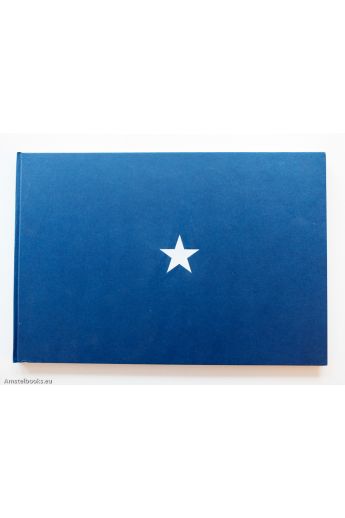 ANAP D.R. A New American Picture€ 600,00

Werk van Doug Rickard
- 2010 A New American Picture Limited edition of 200 copies.
- 2012 A New American Picture Expanded edition with introductory essay by David Campany.
- 2013 Tom Edition of 300 copies.
- 2014 All Eyes on me One Picture Book 86.
- 2014 Patriot Act
- 2013 N.A. Edition of 200 copies.
- 2014 N.A.
Tentoonstellingen
- 2010 Anonymes: L'Amérique sans nom: Photographie et Cinéma
- 2011 New Photography 2011
- 2012 Publicly Private: Enrico Natali and Doug Rickard
- 2012 Aperture Remix
- 2013 Tim Hetherington and Doug Rickard
- 2013 Staking Claim: a California Invitational