
Jeanloup Sieff
fotograaf
Jeanloup Sieff (1933–2000) was een vooraanstaande Franse fotograaf die bekend stond om zijn werk in de mode, portretfotografie en reportage. Geboren in Parijs bij Poolse ouders, begon hij zijn carrière in de jaren 1950 en sloot zich in 1958 aan bij de Magnum Agency. Zijn werk kenmerkt zich door gedurfde composities en een humanistische benadering van fotografie. Hij was een prominente figuur in de Franse fotografische scene, met name in de jaren 1960 en 1970.[1,2,3,4,5,6,7,8]
- mode
- portretfotografie
- humanistische fotografie
- dans
Jeanloup Sieff: a photographic practice across subjects
A sourced introduction to Jeanloup Sieff’s work across portraiture, city scenes, still life and dance, with close attention to the distinct 1978 and 2011 editions of *La Vallée de la Mort*.
Jeanloup Sieff was a French photographer, born in Paris on 30 November 1933 and dead in Paris on 20 September 2000. The Bibliothèque nationale de France (BnF) authority page records his birth in the 15th arrondissement and his death in the 7th; it identifies photography as his field and gives his ISNI as 0000 0001 2144 4901. (Bibliothèque nationale de France) The Library of Congress linked-data authority record independently gives the same dates and Paris as both birthplace and place of death. (Library of Congress linked-data authority record)
Sieff’s surviving public record is notably varied. Centre Pompidou lists city scenes, portraits, still lifes and dance photographs in its holdings, from Boîte de nuit, Paris and Chaises (both 1956) to Istanbul en hiver (1959), a 1961 portrait of Yves Montand, and several photographs involving Carolyn Carlson and dancers. (Centre Pompidou) Rather than treating these subjects as isolated categories, they offer a useful way to see the range that his books select and reshape.
A practice represented by institutions
Centre Pompidou identifies Sieff as a French photographer born in Paris in 1933 and dead there in 2000, while its artist record presents works across several decades and subjects. (Centre Pompidou) This museum record matters for readers of photography books because it places portraits, urban scenes, still lifes and dance images in one documented body of work.
The BnF page reinforces the scale of that documentary record. It lists 69 resources under Sieff’s works, including 15 textual works and eight manuscript or archival resources; it also lists 24 resources about him. (Bibliothèque nationale de France) Those figures do not make every publication equivalent, but they make clear that books sit alongside archival and critical material through which his work has continued to be catalogued and studied.
La Vallée de la Mort and the problem of editions
La Vallée de la Mort provides a strong example of why exact edition history matters. Éditions Contrejour describes the original book as appearing in 1978, when Sieff was forty-five, and says that it recorded a camper-van journey through Death Valley with his wife Barbara. (Éditions Contrejour) On that publisher’s account, cracked ground, wind-patterned surfaces, dunes and heavy skies become the project’s visual motifs, photographed in intense blacks with restrained framing. (Éditions Contrejour)
The publisher also reproduces Sieff’s reflection that Death Valley had come to concentrate his desires for escape, self-reconnection and discovery of the unknown. (Éditions Contrejour) This positions the book as more than a depiction of a famous landscape: it is framed as a travel project in which place, imagination and photographic attention meet.
The edition described on that specific publisher page is a 2011 reissue with a preface by Claude Nori, 112 pages, a 24 × 30 cm format, and hard binding. (Éditions Contrejour) These are details of the 2011 edition, not claims about the 1978 original. Keeping that distinction visible is essential when consulting catalogue records or comparing copies.
Reading across the work
The Centre Pompidou holdings offer a practical route into Sieff’s range: dance photographs can be considered alongside a portrait such as Yves Montand (1961), an urban image such as Boîte de nuit, Paris (1956), or Istanbul en hiver (1959). (Centre Pompidou) A book can therefore be read as a particular selection from a practice that moved between people, places, still life and performance.
For a reader, the relevant question is often not whether one title contains the whole of Sieff’s work, but what kind of attention its sequence asks for. La Vallée de la Mort, for example, brings the sustained experience of travel to the foreground; the museum holdings make it possible to set that project beside images made in very different circumstances. (Éditions Contrejour; Centre Pompidou)
Sources
Boeken
-
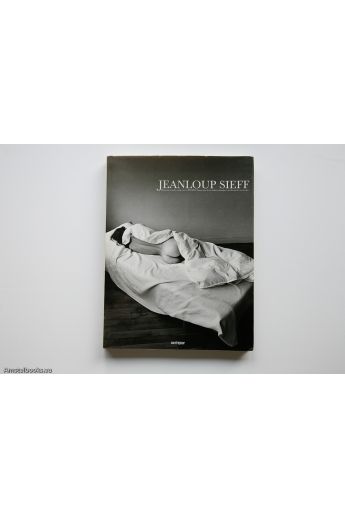 Derrières€ 200,00
 -
 J'aime la danse€ 65,00
 -
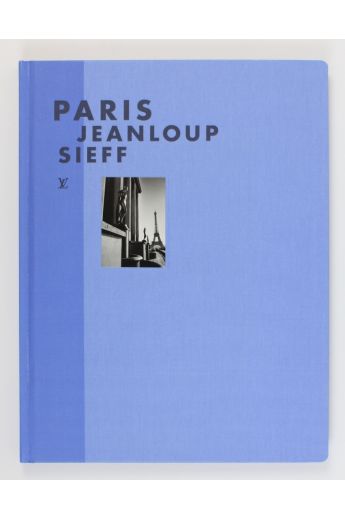 JEANLOUP SIEFF PARIS€ 149,00
 -
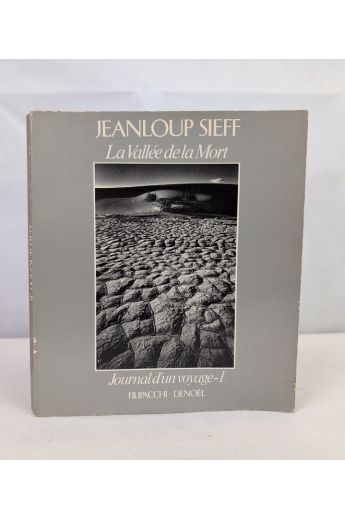 La Vallée de la Mort€ 40,00
 -
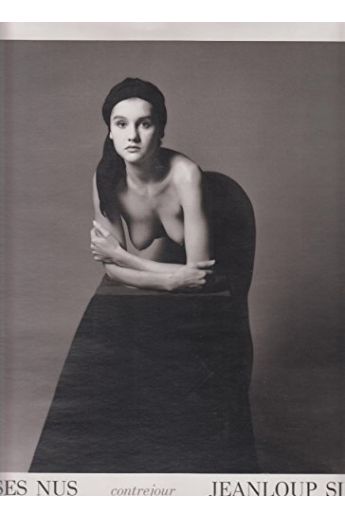 Torses Nus€ 200,00
 -
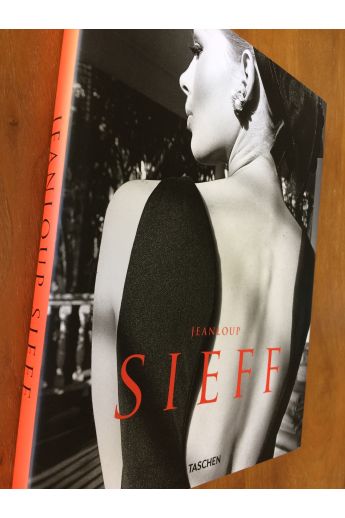 Torsi - torses nus€ 90,00


Werk van Jeanloup Sieff
- 1962 J'AIME la dance Collection featuring large photographs of dance.