
Josef Koudelka
fotograaf
Josef Koudelka is een in Tsjechië geboren Franse fotograaf die bekendstaat om zijn humanistische en poëtische benadering van fotografie. Hij werd in 1938 geboren in Boskovice en studeerde aanvankelijk luchtvaarttechniek voordat hij in de jaren 50 overstapte op fotografie. Hij kreeg internationale erkenning voor zijn documentatie van de Sovjet-invasie van Tsjecho-Slowakije in 1968 en zijn uitgebreide werk over de trekkende Roma in Europa. Als lid van Magnum Photos sinds 1975 wordt het werk van Koudelka gekenmerkt door een visceraal, vaak bevreemdend esthetisch beeld dat momenten van ontwrichting, ballingschap en culturele transitie vastlegt. In 1987 verkreeg hij de Franse nationaliteit.[1,2,3]
- Roma-volk
- Sovjet-invasie van Tsjecho-Slowakije
- ballingschap
- humanistische fotografie
Josef Koudelka: Exile, Sequence, and the Photographic Book
A specialist introduction to Josef Koudelka’s work, tracing the movement from his Roma photographs and the Prague invasion to the book forms of *Gypsies* and *Exiles*.
Josef Koudelka’s photographic books give durable form to a career shaped by travel, political rupture, and an unusually stringent relation between lived experience and edit. Getty’s Union List of Artist Names establishes the core identity: Josef Koudelka, also known as P.P., is a Czech photographer born in 1938, with Czech and French nationalities (Getty ULAN). The alias is not incidental. It points to the anonymous circulation of his photographs of the 1968 Warsaw Pact invasion of Czechoslovakia, the event through which questions of authorship, risk, displacement, and publication became inseparable in his career.
From engineering and theatre to a photographic vocation
Koudelka was born in Boskovice on 10 January 1938 and graduated from the Czech Technical University in Prague in 1961 with a degree in aeronautical engineering (Britannica). During the early 1960s he photographed Prague theatre and made sustained photographs among Roma communities. Britannica describes the latter as a lifelong interest and notes that he spent extended periods living with the people he photographed; by 1967 he had left engineering for photography full-time (Britannica).
The Getty Museum’s retrospective account gives this early work a particularly useful material and institutional context. It records his theatre work with leading Czech companies and his extended stays in Roma encampments in Slovakia and the Czech lands of Moravia and Bohemia, where he made thousands of photographs (Getty Museum). These were not preliminary sketches to an eventual “major” subject. They supplied the recurrent concerns—performance, community, ritual, mobility, and the charged relation between photographer and subject—that made the later books possible.
1968 and the problem of authorship
In August 1968 Koudelka photographed the Warsaw Pact invasion in Prague. Britannica states that he smuggled the photographs out and published them under P.P., “Prague Photographer,” to protect himself and his family; the anonymous series received the Overseas Press Club’s Robert Capa Gold Medal in 1969 (Britannica). Magnum’s profile similarly records the 1968 photographs, the P.P. credit, his 1970 departure to seek political asylum, and his naturalization as a French citizen in 1987 (Magnum Photos).
Getty’s Nationality Doubtful exhibition makes the legal and biographical stakes explicit: because he could not produce documentation verifying his Czechoslovak birthplace while stateless in Western Europe, he acquired the legal status named by the exhibition (Getty Museum). The word “exile” in Koudelka’s work is therefore not a retrospective metaphor applied to an otherwise conventional travel practice. It has a precise political history, even as his photographs resist simple illustration of it.
Gypsies: a first book and a long project
The first edition of Gypsies was published by Aperture in 1975; Magnum identifies it as Koudelka’s first book (Magnum Photos). The Getty exhibition states that the 1975 publication selected work from the thousands of photographs made in Roma encampments, and that the retrospective brought together exhibition and book prints as well as the materials used to make the volume (Getty Museum). That curatorial emphasis matters: Gypsies should be considered an edit from a long engagement, not a transparent report on an undifferentiated people.
A 1992 Hasselblad Center catalogue, documented by the International Centre for the Image, describes photographs made mostly in segregated Roma settlements in East Slovakia between 1962 and 1968 and characterizes the work through strict form, poetic vision, human commitment, and socio-documentary realism (International Centre for the Image). The historical terminology in the original title belongs to its editions; contemporary description should identify the communities as Roma and keep the specific sites and dates supplied by the record in view.
Exiles: book form after statelessness
Exiles followed in 1988. Getty calls work from Koudelka’s years of exile—first published in Exiles (1988)—a cornerstone of its retrospective (Getty Museum). Magnum dates the photographs shown in relation to the project from 1968 to the early 1980s and describes a 2017 exhibition that examined how Exiles was made, including previously unpublished pictures and self-images made during travel (Magnum Photos).
Koudelka’s own account, quoted by Magnum, is notably spare: exile means having left one’s country and being unable to return; he recalls travelling for decades without remaining anywhere more than three months (Magnum Photos). The same source preserves a curator’s observation that the project became more personal, while resisting the conventional category of self-portrait. This makes Exiles a crucial photobook for readers interested in how sequencing can hold a dispersed geography, a recurring figure, and an artist’s bodily presence without collapsing them into memoir.
Later landscape and continuing consequences
After settling in Paris and completing Exiles, Koudelka worked primarily with panoramic cameras. Getty describes panoramas of terrains mined, industrially scarred, altered by time, or devastated by conflict, beginning from 1986; Chaos belongs to this later landscape turn (Getty Museum). Magnum likewise lists Chaos among the key subsequent books (Magnum Photos).
Koudelka’s importance lies less in a generic label of documentary photography than in the rigor with which he moves between event, prolonged encounter, travel, and book sequence. Gypsies, Exiles, and Chaos mark distinct phases of that work while remaining linked by an ethic of looking that never treats mobility, marginality, or ruin as merely picturesque.
Sources
Boeken
-
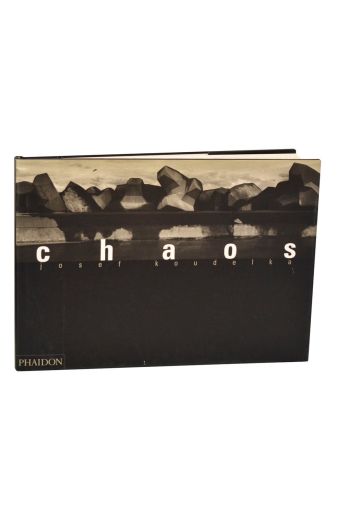 Chaos€ 1.788,00
 -
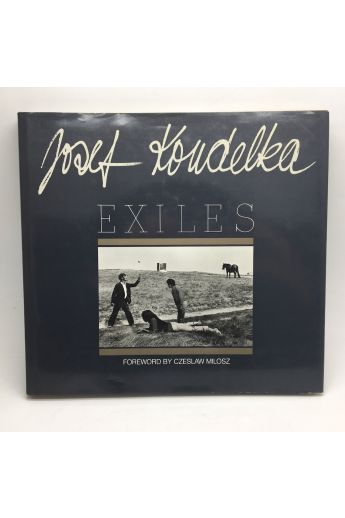 Exiles€ 180,00
 -
 Gypsies€ 67,00
 -
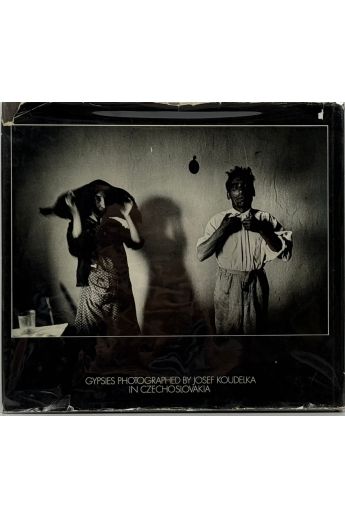 GYPSIES€ 72,00
 -
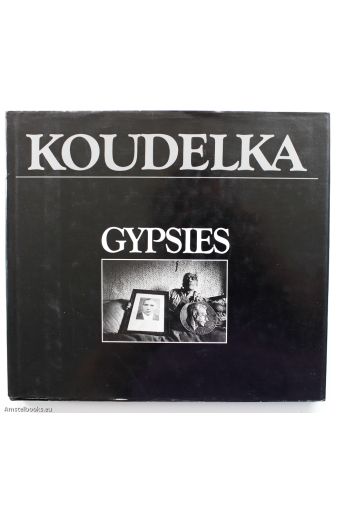 GYPSIES€ 180,00
 -
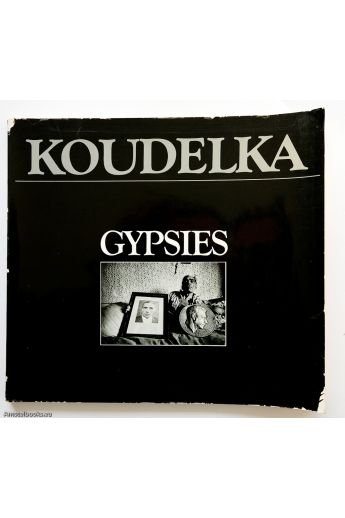 Gypsies : Photographs€ 360,00
 -
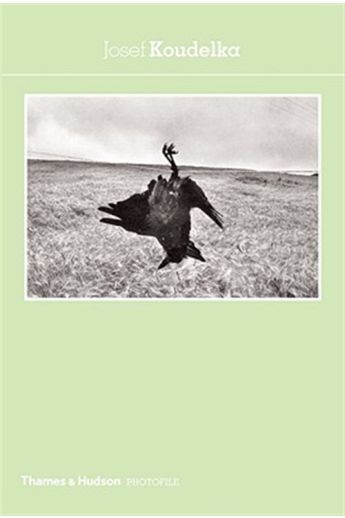 Josef Koudelka€ 12,00
 -
 Josef Koudelka€ 35,00
 -
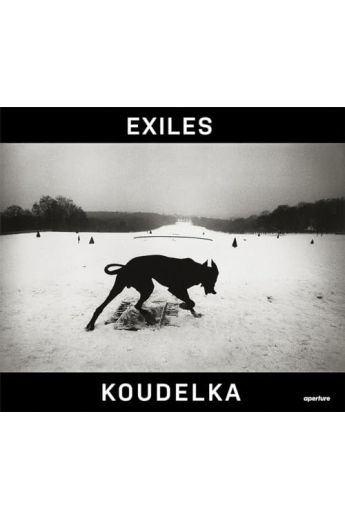 Josef Koudelka: Exiles€ 41,00
 -
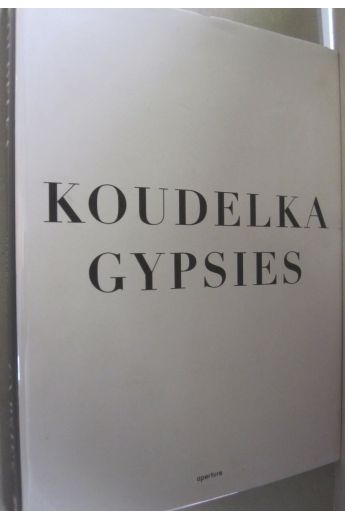 Koudelka: Gypsies€ 70,00
 -
 LIMESTONE€ 1.436,00


Werk van Josef Koudelka
- 1984 Josef Koudelka Volume 15 in the Photo Poche series.
Prijzen
- 1978 Prix Nadar
- 1989 Grand Prix National de la Photographie
- 1991 Grand Prix Henri Cartier-Bresson
- 1992 Hasselblad Foundation International Award in Photography