
Robert Doisneau
fotograaf
Robert Doisneau was een beroemde Franse fotograaf die bekend stond om zijn vermogen om het dagelijks leven in Parijs in de 20e eeuw vast te leggen. Als pionier van de straatfotografie en een sleutelfiguur binnen de humanistische fotografie, staat hij bekend om zijn documentaire benadering waarbij hij vluchtige, authentieke momenten met unieke gratie vastlegde. Opgeleid in gravure en lithografie, begon hij zijn fotografische carrière in het atelier van Léon Ullmann. Gedurende zijn carrière werkte hij samen met grote publicaties zoals VOGUE en LIFE, maar vestigde hij zich primair als onafhankelijke fotograaf. Zijn meest iconische werken omvatten 'Le Baiser de l'Hôtel de Ville' (1950). Hij ontving talloze onderscheidingen voor zijn werk, waaronder de Kodak Prize in 1945.[1,2]
- straatfotografie
- humanistische fotografie
- het leven in Parijs
- dagelijks leven
Robert Doisneau: The Crafted Poetry of Everyday France
A biographical and critical profile of Robert Doisneau that places his humane, often witty photographs of Paris and its suburbs within his wider practice as a trained image-maker, commercial photographer, photo-illustrator, and prolific maker of books.
Robert Doisneau (1912–1994) made ordinary French life appear inexhaustible. Children, workers, lovers, café habitués, shop windows, factory floors, streets and suburbs became the cast and scenery of a photographic theatre at once affectionate, comic and carefully constructed. The Bibliothèque nationale de France authority record identifies him as a French photographer born in Gentilly on 14 April 1912 and dead in Paris on 1 April 1994; it also records his stable BnF identifier and ISNI, firmly distinguishing the photographer from similarly named people (BnF authority data).
From graphic craft to photography
Doisneau’s education began in the trades of the printed image. The chronology maintained by his studio records studies at the École Estienne from 1925 to 1929, a diploma in engraving and lithography, work at the pharmaceutical design firm Atelier Ullmann, and a position with André Vigneau in 1931. He sold his first reportage to L’Excelsior in 1932, then worked as an industrial photographer at Renault’s Billancourt factories from 1934 to 1939 (Atelier Robert Doisneau). These were not incidental preliminaries. Training in reproduction, lettering and layout, followed by industrial and advertising assignments, gave him a practical understanding of how photographs would function on a page.
The International Center of Photography adds the broader professional arc: Rapho recruited him in 1939; during the war he photographed the occupation and liberation of Paris and forged documents for the Resistance; after the war he resumed advertising and magazine work, returned to Rapho in 1946, and produced fashion and reportage for French Vogue from 1948 to 1952 (ICP archive biography). His career therefore crossed industrial documentation, clandestine graphic work, editorial assignments and self-directed observation. The familiar street pictures belong within that mixed economy rather than outside it.
A humanist geography
Doisneau is often reduced to picturesque Paris, above all the public romance associated with Le Baiser de l’Hôtel de Ville. Yet the locations that formed his imagination extended beyond the postcard centre. A 1994 Centre Pompidou exhibition stressed Gentilly, Montrouge and Saint-Denis, describing the suburbs as central to his Paris and the human figure—not scenery—as his ultimate subject. It also connected his 1940s pictures to the Photo League’s 1948 exhibition French Photography Today in New York (Centre Pompidou).
That emphasis helps explain both his place in French humanist photography and the tone of his pictures. ICP characterizes his street work as poetic, playful and sometimes surreal, attentive to amusing juxtapositions and oddities of behaviour. But warmth did not mean innocence about photographic artifice. The Fondation Henri Cartier-Bresson’s 2010 exhibition, assembled from archival and other original prints, argued that the apparent spontaneity is more complex: Doisneau could behave like a juggler or illusionist in pursuit of a more persuasive realism. Its selection of work from 1930 to 1966 aimed to trace a movement “from craft to art” and found gravity beneath the pleasant anecdote (Fondation Henri Cartier-Bresson). His photographs are best read as encounters shaped by patience, timing, editorial intelligence and, at times, direction—not as transparent windows onto a vanished France.
The photographer in print
Books were a recurrent form in Doisneau’s practice, not merely containers assembled after the photographs were made. ICP identifies La Banlieue de Paris (1949), created with Blaise Cendrars, as his first photobook and notes that more than twenty publications followed, many devoted to Paris and Parisians. The Fondation Henri Cartier-Bresson likewise calls the Cendrars collaboration his first book and places it after his formative work in the suburbs (ICP; Fondation Henri Cartier-Bresson). The BnF’s scholarly bibliography gives the edition-level reference—Pierre Seghers, Paris, 1949—and also records Gosses de Paris (Jéhéber, 1956), with a preface by Jean Nohain and a poem by Jean Donguès (BnF, La photographie humaniste). These collaborations show text and image deliberately brought into dialogue.
Our catalogue records ten publications associated with Doisneau: La Banlieue de Paris (1949), St. Germain des Prés (1950), L’automobile en France (1951), Lyon et ses environs (1953), 1, 2, 3, 4, 5 (1955), Gosses de Paris (1956), La Loire: Journal d’un voyage 2 (1978), Robert Doisneau in the “Les Grands photographes” series (1983), Doisneau en Ardèche (2001), and Guy Mandery’s later bibliographical study Robert Doisneau: un photographe et ses livres (2014). Taken together, they reveal a practice wider than a single iconic image: the capital and its outskirts, children and counting, the automobile, Lyon, the Loire and Ardèche, followed by monographic and bibliographical reassessment. The sequence also makes visible the continuing afterlife of his archive after his death.
Several of these titles speak directly to recurring strands in his career. L’automobile en France echoes the industrial world he learned at Renault; La Banlieue de Paris turns the peripheral geography of his childhood and daily wandering into a sustained book; and Gosses de Paris and the children’s counting book 1, 2, 3, 4, 5 reflect his enduring attention to children (BnF/Centre national de la littérature pour la jeunesse). The regional books resist the idea that his France ended at the Paris boundary. The 2014 bibliography is especially apt because his early training was explicitly connected to the book trade and his mature photographs circulated through magazines and books as well as exhibition prints.
Recognition and legacy
Doisneau’s institutional standing was established during his lifetime and has continued to grow. His studio chronology records the Prix Kodak in 1947, Prix Niépce in 1956, Grand Prix national de la photographie in 1983, and participation in the national DATAR photographic mission in 1984 (Atelier Robert Doisneau). ICP also records his appointment as Chevalier of the Legion of Honour in 1984 and major retrospectives at the Bibliothèque nationale, Art Institute of Chicago and George Eastman House (ICP).
Museum collections preserve a useful corrective to the dominance of the famous kiss. The Museum of Modern Art lists twenty-three works online, ranging from La Musique des Puces (1944) and L’Innocent (1949) to postwar café, street and northern-France subjects, as well as a long exhibition history (MoMA artist record). L’Innocent itself is held as a gelatin silver print dated 1949 (MoMA object record). Such holdings allow Doisneau to be studied print by print, beyond reproduction and nostalgia.
His achievement lies in holding apparent opposites together: reportage and invention, tenderness and irony, skilled craft and seeming ease, the individual instant and the sustained architecture of a book. The catalogue’s ten titles are therefore not peripheral memorabilia. They are evidence of the form in which much of his photographic imagination was organized, circulated and repeatedly rediscovered.
Sources
- Bibliothèque nationale de France authority data
- Atelier Robert Doisneau, biography
- International Center of Photography, archive biography
- Centre Pompidou, 1994 Robert Doisneau exhibition
- Fondation Henri Cartier-Bresson, Robert Doisneau: Du métier à l’oeuvre
- BnF, La photographie humaniste: selective bibliography
- BnF/Centre national de la littérature pour la jeunesse, “Robert Doisneau et les livres pour enfants”
- Museum of Modern Art, Robert Doisneau
- Museum of Modern Art, L’Innocent
Boeken
-
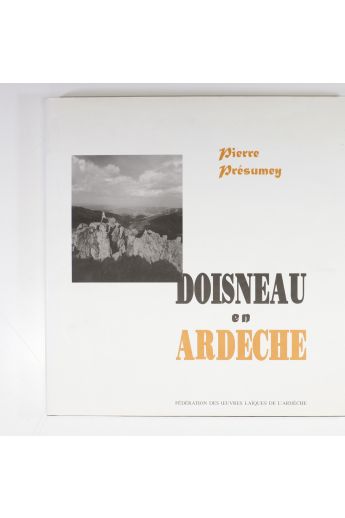 Doisneau en Ardèche€ 40,00
 -
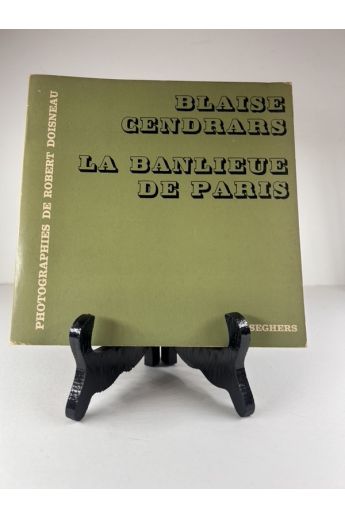 La Banlieue de Paris€ 119,00
 -
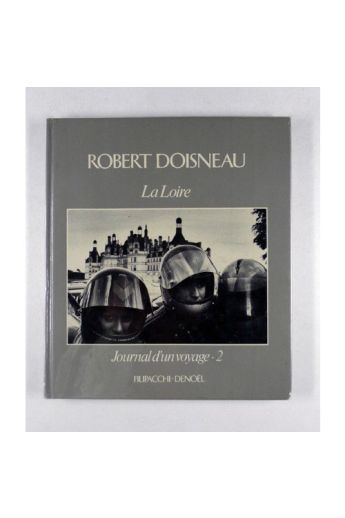 La Loire: Journal d'un Voyage 2€ 144,00
 -
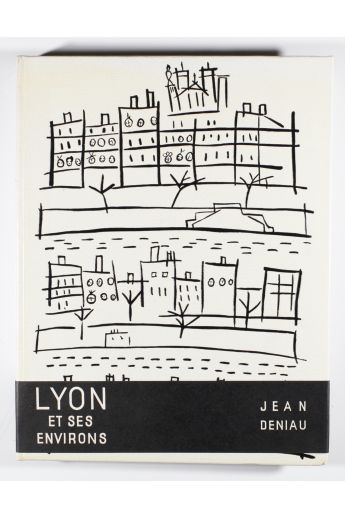 Lyon et Ses Environs€ 25,00


Werk van Robert Doisneau
- 1950 Le Baiser de l'Hôtel de Ville One of his most famous works.
Prijzen
- 1945 Prix KODAK