
Sanne Sannes
fotograaf
Sanne Sannes (1937–1967) was een Nederlandse fotograaf en kunstenaar die bekendstond om zijn korte maar intense carrière in de jaren 60. Hij studeerde schilderkunst en grafiek aan de Minerva Academy of Visual Arts in Groningen voordat hij bij het leger ging, waar hij verder experimenteerde met fotografie. Zijn werk wordt gekenmerkt door evocatieve zwart-witbeelden, vaak met vrouwelijke naakten en onderzoek naar thema's als erotiek, intimiteit en menselijke emotie. Sannes was een vooraanstaande figuur in de Nederlandse fotografie, bekend om zijn innovatieve technieken — zoals bewegingsonscherpte, hoog contrast en experimentele afdrukmanipulatie (bijv. het krassen van negatieven) — die vaak lijnrecht tegenover de gevestigde normen van die tijd stonden. Hij ontving aanzienlijke internationale aandacht en won in 1964 zowel de Nederlandse als de Europese 'Prix Nièpce'. Zijn leven werd abrupt afgebroken toen hij op 30-jarige leeftijd omkwam bij een verkeersongeluk.[1,3,4]
Sanne Sannes: A Photobook Practice Cut Short
A sourced biography of Dutch photographer Sanne Sannes (1937–1967), covering his experimental darkroom practice, the 1964 photobook Oog om oog with Hugo Claus, and his posthumous publications including Sex a gogo and Diary of an Erotomaniac.
The photographer is securely identified by the RKDartists authority record, which gives Sanne Sannes as a Dutch photographer, artist, and filmmaker, born in Groningen on 19 March 1937 and killed in Bergen, North Holland, on 23 March 1967, and by cross-linked international authority records including Wikipedia's bibliographic authority summary (ULAN 500347509, VIAF 24677641, PIC 334121, and ISNI 0000 0000 2071 7480). The independent University of Leiden Depth of Field biography supplies the same life dates and a detailed chronology. The Rijksmuseum collection record further documents Sannes as maker or named maker of works dated between 1960 and 1967.
Sannes enrolled at the Minerva Academy in Groningen in 1955 to study painting and graphics, taking photography as a secondary discipline under Huug Smit, according to Depth of Field. He left the academy in 1959 and continued darkroom experimentation during his subsequent military service. The RKD record independently records Minerva as his education, his early departure in 1959, and a working period of approximately 1952–1967. Working primarily in available light with a Rolleiflex or 35mm Nikon on high-speed Ilford HP3 film, Sannes developed a distinctive visual language of close-cropped, grainy, high-contrast black-and-white images—often exposing at slow shutter speeds such as 1/25 second, shooting through screens or gauze, superimposing negatives, or physically scratching and painting the emulsion (Wikipedia: Sanne Sannes; MonoVisions).
Institutional recognition came early. His first photographs were published in 1959 and shown at the Groninger Museum in 1960 (Wikipedia). The University of Leiden chronology records Sannes’s inclusion in Photography ’63 at George Eastman House in Rochester, New York, alongside group exhibitions at the Stedelijk Museum in Amsterdam and the Gemeentemuseum Arnhem (Vijf Gelderse Fotografen, 1964), as well as his Dutch and European Prix Nièpce awards in 1964. The Rijksmuseum page makes the material breadth of his practice tangible through collection entries for nude studies, portraits, landscapes, and pages from Diary of an Erotomaniac.
Oog om oog and the posthumous books
Oog om oog (1964) is the central contemporary book publication of Sannes’s lifetime. The University of Leiden chronology states that Sannes announced two photobooks in 1962; only the project with text by the Belgian writer Hugo Claus (1929–2008) was realised during his life as Oog om oog. De Bezige Bij released the volume in Amsterdam in December 1964, pairing Sannes’s grainy black-and-white photographs—including work made in Sweden and Denmark—with erotic poetry by Claus (Depth of Field; MonoVisions). Earlier in the decade, his work had also appeared in literary-artistic periodicals such as Randstad 3 (1962).
Several further book and film projects remained unfinished when Sannes died after a road accident in Bergen on 23 March 1967 while returning from a fashion assignment with his assistant Gerrit Jan Wolffensperger (Depth of Field; Wikipedia). His 1966 16mm photo-film for VPRO, Dirty Girl (Santa Lucia, featuring Lucia Campert), had been sent back for re-editing over its sadomasochistic themes and was left unrevised at his death (Wikipedia). His subsequent books appeared posthumously: Sex a gogo (Amsterdam: De Bezige Bij, 1969), compiled with text and layout by Walter Steevensz using Sannes’s photo-collages, cut-out prints, and comic-strip fragments; and The Face of Love (London: Cranberry Press, 1972) (Wikipedia). Another planned book, Diary of an Erotomaniac, survived as an unpublished maquette and was later examined in Tamara Berghmans’s study The Making of a Photobook: Sanne Sannes' Maquette for Diary of an Erotomaniac (Amsterdam: Rijksmuseum, 2009), followed by retrospective volumes such as Sanne Sannes fotograaf 1937–1967 (Fragment, 1992/1993) and Tsuyoshi Kawasoe’s Visionary Vision of Sanne Sannes (In Form Library / Kahmann Gallery, 2011).
Sources
Boeken
-
 Oog om oog€ 200,00
-
 Randstad 3€ 60,00
-
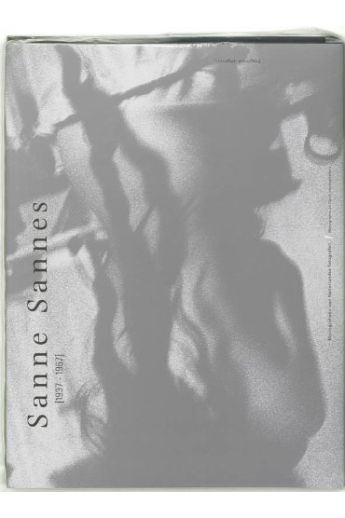 Sanne Sannes [1937-1967]€ 41,00
-
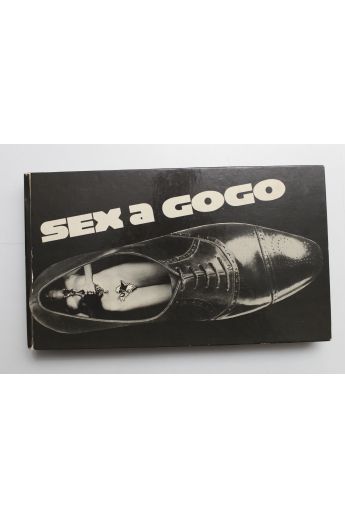 SEX a GOGO€ 400,00
-
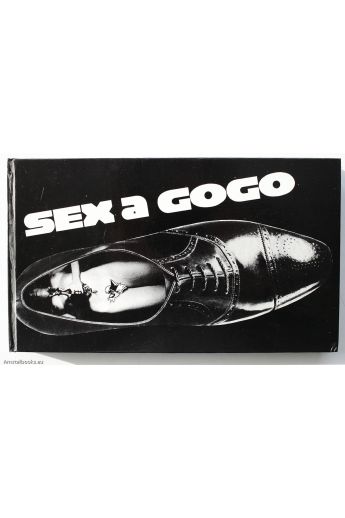 SEX a GOGO€ 395,00
-
 The Face of Love€ 240,00
-
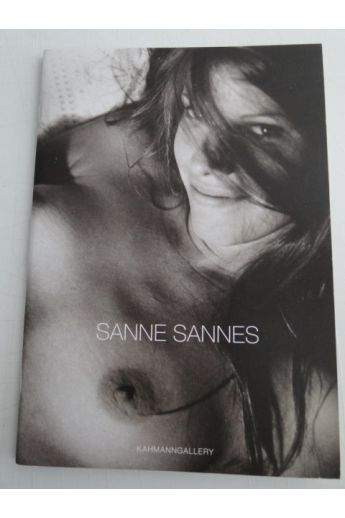 Visionary Vision of Sanne Sannes€ 35,00


Werk van Sanne Sannes
- 2011 Visionary Vision of Sanne Sannes Co-published with Kahmann Gallery for an exhibition at limArt, Tokyo. Includes bilingual text and colophon.
- 1964 Oog om oog (Eye for an Eye) Combination of Sannes' photos and poems by Hugo Claus.
- Les Amoureux A 'ciné-roman' (cinema-novel) project; only a shortened film version was produced.
Tentoonstellingen
- 1963 Photography ’63
- 1964 Vijf Gelderse Fotografen (Five Photographers from Gelderland)
Prijzen
- 1964 Prix Nièpce (Dutch and European)