
Emmy Andriesse
fotograaf
Emmy Andriesse (1914–1953) was een Nederlandse fotograaf die bekend stond om haar clandestiene documentatie van Nederland tijdens de nazi-bezetting. Ze was een belangrijke bijdrager aan de 'New Photography'-beweging en werkte samen met andere prominente fotografen uit die tijd, waaronder Cas Oorthuys en Eva Besnyö.[1]
- bezetting
- humanisme
- new photography
Emmy Andriesse: Documentary Urgency, Modernist Training, and the Postwar Photobook
A source-grounded account of Emmy Andriesse’s modernist formation, clandestine Hunger Winter work, postwar commissions, and the archival context for her photobook practice.
Emmy Eugenie Andriesse (1914–1953) occupies a distinctive place in Dutch photography: trained in the visual languages of interwar modernism, she made socially alert reportage under occupation and then resumed a wide-ranging postwar practice encompassing reconstruction, portraiture, fashion, and books. The WorldCat authority entity identifies her as a Dutch photographer, gives 14 January 1914 and 21 February 1953 as her life dates, and links her to The Hague and Amsterdam; it also supplies the persistent entity URI used to disambiguate her from namesakes (WorldCat Entity). The Dutch scholarly biographical lexicon similarly identifies her as Emmy Eugenie Andriesse, born in The Hague and deceased in Amsterdam (Digitaal Vrouwenlexicon van Nederland).
Formation and photographic language
From 1932 to 1937 Andriesse studied advertising design at the Academy of Fine Arts in The Hague, where photography and film formed important parts of the curriculum. The scholarly biography records that she increasingly concentrated on photography from her second year, while Leiden University Libraries identifies Paul Schuitema and Gerrit Kiljan among the teachers through whom she encountered modernist photographic principles (Digitaal Vrouwenlexicon van Nederland; Leiden University Libraries, Emmy Eugenie Andriesse collection).
That education helps locate her early work within Dutch Nieuwe Fotografie rather than reducing it to a later wartime reputation. The Huygens biography characterizes her documentary work for Ons Leven through attention to material texture, unusual camera positions, and diagonal composition; it also notes the positive reception of her 1937 social reportage In de Jordaan at the Stedelijk Museum (Digitaal Vrouwenlexicon van Nederland). These are useful terms for understanding an oeuvre in which graphic structure and an interest in lived social space remain mutually dependent.
Occupation, the Hunger Winter, and clandestine witnessing
The occupation transformed both the conditions and stakes of Andriesse’s practice. Leiden’s collection guide states that, during the 1944–45 Hunger Winter, she photographed hunger and deprivation as part of the photographers later known as de illegale camera; it places this work alongside her post-liberation pictures of destruction and of people rebuilding daily life (Leiden University Libraries). The Huygens biography adds that the German Journalistenbesluit ended her professional work in 1941, that she went into hiding, and that she joined the group subsequently called the Ondergedoken Camera (Digitaal Vrouwenlexicon van Nederland).
Fotomuseum Den Haag describes her Hunger Winter photographs, the Allied liberation of 1945, and early reconstruction as central subjects of her work. Its account of the photograph often called “little boy with the pan” underscores how one image became emblematic of civilian starvation, while also stressing that her career encompassed children’s portraits, fashion, advertising, and news photography (Fotomuseum Den Haag, Emmy Andriesse (1914–1953)). The museum’s framing is a corrective to treating her solely as a war photographer: the historical emergency is indispensable, but it does not exhaust her professional range.
After 1945: commissions, portraiture, and books
Andriesse’s postwar work continued to combine commissioned production with personal visual intelligence. From 1947, according to Leiden University Libraries, Willem Sandberg commissioned her to make artists’ portraits for the Stedelijk Museum in Amsterdam. The same archive guide records work in fashion, European travel portraiture, collaborations with Cas Oorthuys on photobooks for Contact, and a 1951 commission from Bert Bakker for photographs inspired by Vincent van Gogh (Leiden University Libraries). The scholarly biography describes the Stedelijk portraits as monumentally composed, frequently symmetrical and posed studio pictures, and treats their tonal richness as a technical high point (Digitaal Vrouwenlexicon van Nederland).
For photobook study, this record argues against a sharp separation between reportage and applied work. Andriesse’s archive lists dedicated contact-album themes for the Hunger Winter/liberation, fashion, commissions, people at work, Amsterdam, sculptors, children, and Vincent van Gogh (Leiden University Libraries). Those groupings document a practice attentive to serial organization across editorial, institutional, and book-oriented assignments. She died in 1953, before the Van Gogh project was complete; the scholarly account states that the book appeared shortly after her death (Digitaal Vrouwenlexicon van Nederland).
Archive and afterlife
The holdings at Leiden make the material basis of Andriesse’s work unusually visible. The university describes an estate comprising approximately 14,000 6×6 negatives, more than 1,000 small-format negatives, 21 contact albums, roughly 1,730 prints, notebooks, albums, and inventory books; it acquired the collection from her widower Dick Elffers in 1962 (Leiden University Libraries). Fotomuseum Den Haag’s retrospective was mounted jointly with Leiden’s Print Room and drew on original negatives and prints, an institutional acknowledgement that the archive permits a fuller account than the familiar Hunger Winter images alone (Fotomuseum Den Haag).
Andriesse’s significance, then, lies not just in a set of iconic wartime photographs but in the continuity of a modernist, socially engaged practice across radically changed circumstances. Her surviving archive enables attention to editing, sequence, and commission alongside individual images—an essential perspective for readers approaching her through the photographic book.
Sources
Boeken
-
 Amsterdam as a center of culture€ 30,00
 -
 Amsterdam tijdens de hongerwinter€ 425,00
 -
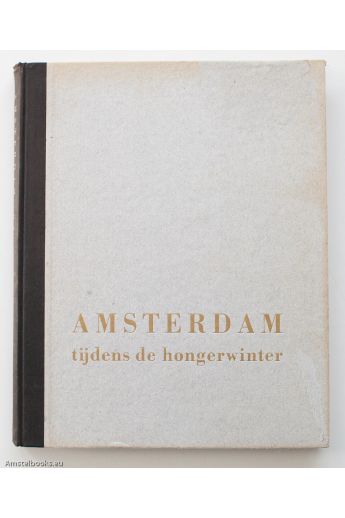 Amsterdam Tijdens den Hongerwinter€ 120,00
 -
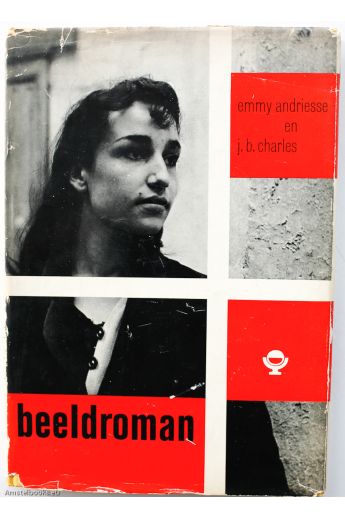 Beeldroman€ 65,00
 -
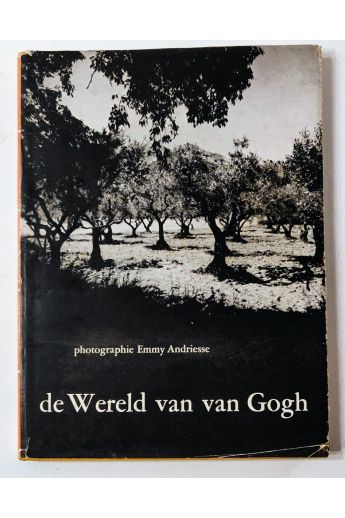 De wereld van van Gogh€ 35,00
 -
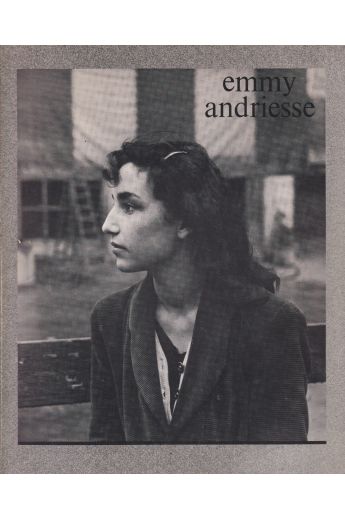 Emmy andriesse foto's 1944/52€ 40,00
 -
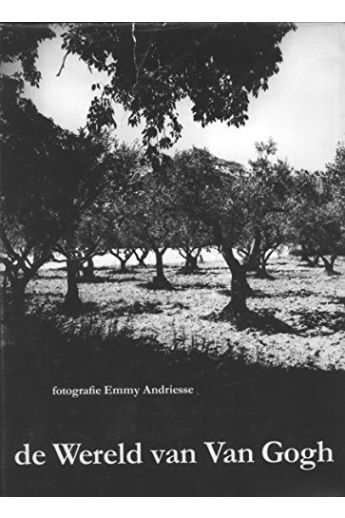 World of Van Gogh€ 11,00


Werk van Emmy Andriesse
- 1954 Amsterdam as a center of culture Photography by Emmy Andriesse.
Referenties
- E. Straat. Amsterdam as a center of culture. The Municipal Printing Office of Amsterdam. 1954