
Cas Oorthuys
fotograaf
Casparus Bernardus (Cas) Oorthuys was een prominente Nederlandse fotograaf en ontwerper die bekend stond om zijn humanistische en documentaire benadering van het dagelijks leven en de wederopbouw. Geboren in 1908, begon hij zijn carrière als architectuurtekenaar voordat hij in 1936 overstapte naar de fotografie. Hij werd een vooraanstaande figuur in de naoorlogse Nederlandse fotografie, waarbij hij vooral bekendstond om zijn sociale reportage, reisfotografie en artistieke documentairewerken. Oorthuys was tijdens de Tweede Wereldoorlog ook lid van het Nederlands verzet. Zijn werk kenmerkt zich door een scherpe observatie van de menselijke conditie en het veranderende Nederlandse landschap. Hij overleed in 1975 en liet een aanzienlijke erfenis na in de Nederlandse beeldcultuur.[1,2,3,4]
- documentaire fotografie
- sociale reportage
- naoorlogse wederopbouw
- reisfotografie
Cas Oorthuys: documentary photography made to be read in sequence
A source-grounded guide to Cas Oorthuys’s documentary practice, institutional collections, and the importance of contact sheets and sequencing to his photobooks.
Cas Oorthuys: the archive as an argument
The authority record for Cas Oorthuys (1908–1975) is corroborated by the Museum of Fine Arts, Houston, which records the Dutch photographer’s full dates and the Leiden-to-Amsterdam life span (VIAF; MFAH Collections). The basic biographical certainty matters because Oorthuys’ name appears across an unusually broad range of Dutch reportage, industrial, travel and city books. What unifies that range is not a single subject but a sustained documentary attention—and an archive large enough to make editing central to how the work is understood.
Leiden University Libraries holds digitised work by Oorthuys in its Special Collections and places it within an important documentary-photography collection (Leiden University Libraries). Fotomuseum Den Haag similarly identifies him, alongside Emmy Andriesse, as representing the engagement of documentary photographers in Leiden University’s photography collection (Fotomuseum Den Haag). These institutional contexts are useful: they place his photographs in photographic history, not merely in local nostalgia.
A camera in historical time
A recent book description from Atelier EXB offers a focused account of the scope. It situates Oorthuys in Dutch New Photography, describes a practice extending from the interwar years into the 1970s, and characterises the archive as roughly 500,000 images, predominantly made in the 6 × 6 cm format (Atelier EXB). During the Second World War, the same source says, he participated in the resistance and secretly photographed underground meetings, the Hunger Winter and Liberation; after the war his images followed industrial and social change, cities, decolonisation and travel (Atelier EXB).
Those subjects should not be treated as a checklist of historical “coverage.” Oorthuys’ durable achievement is the way people, work, landscape and built environment can coexist in a single photographic practice. The documentary image is neither an impersonal survey nor an isolated human-interest picture. The value for a reader of his books lies in the shift between these registers: a place becomes legible through labour, movement, domestic space, transport, or the ordinary figure caught inside a wider social transformation.
Contact sheets, sequences and books
Oorthuys’ photobooks reward close attention because the archive and the page are inseparable. EXB’s volume is built from contact sheets made by Oorthuys and his wife Lydia, punctuated by larger images, and selects nearly 500 photographs from the Nederlands Fotomuseum archive; its English/French edition is a 528-page hardcover with 504 black-and-white and colour photographs (Atelier EXB). That editorial premise is revealing. A contact sheet keeps neighbouring frames visible: variation, hesitation, return and sequence remain available rather than being concealed by a single definitive print.
For specialist bookshop readers, this offers a practical way into the many Oorthuys titles. Do not approach them only as documents of Amsterdam, postwar reconstruction, industry or travel. Ask what the particular edition selects from an extensive working method; how its captions, typography and page turns manage time; and whether the book lets photographs accumulate as a social observation rather than turning them into decorative evidence. Editions and reissues may share an image but not its sequence, context or physical scale.
The museum and library records confirm the importance of Oorthuys within Dutch documentary photography, while the contact-sheet book shows why that importance remains productive on the page. His photographs give history a human scale; the photobook gives that history rhythm.
Sources consulted
Boeken
-
 Amsterdam€ 15,00
 -
Amsterdam as a center of culture€ 30,00
-
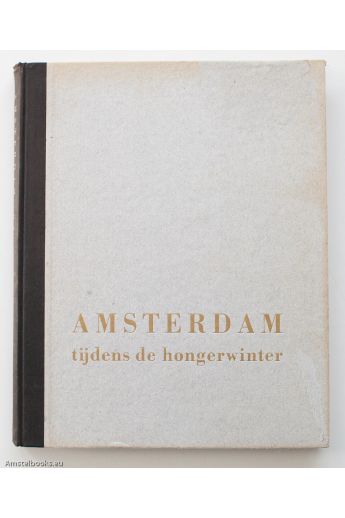 Amsterdam Tijdens den Hongerwinter€ 120,00
 -
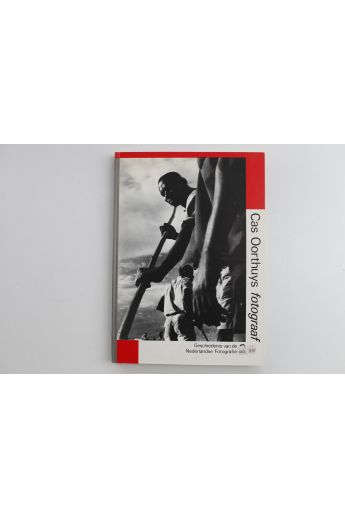 Cas Oorthuys Fotograaf 1908-1975€ 24,00
 -
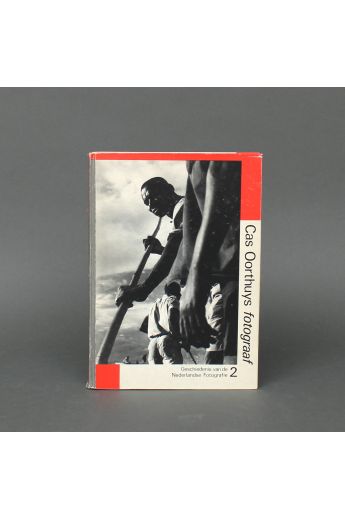 Cas Oorthuys Fotograaf 1908-1975€ 15,00
 -
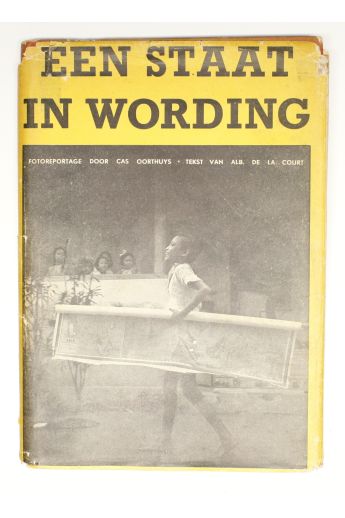 EEN STAAT IN WORDING€ 40,00
 -
Guaranteed real Dutch Congo€ 42,00
-
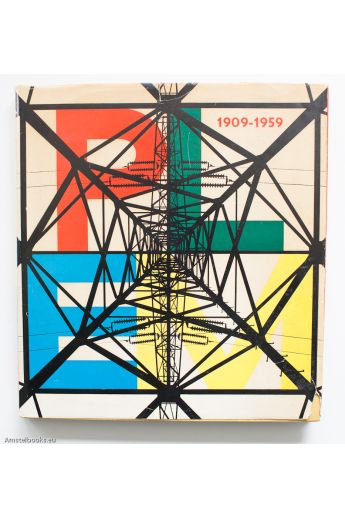 PLEM 1909-1959€ 250,00
 -
Puttershoek 1912-1966€ 32,00
-
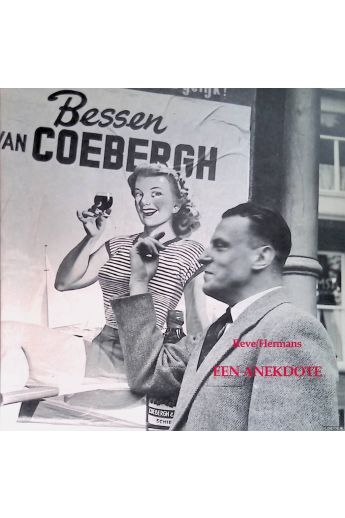 Reve/Hermans Een Anekdote€ 10,00
 -
 Taal & Teken€ 7,00
 -
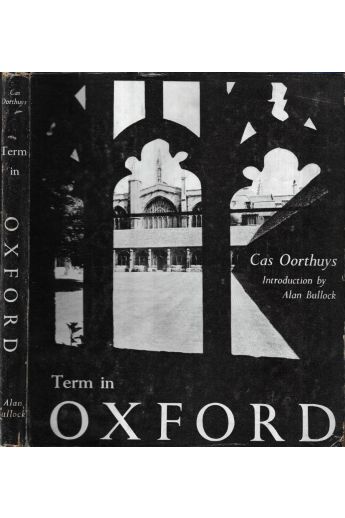 Term in Oxford€ 30,00
 -
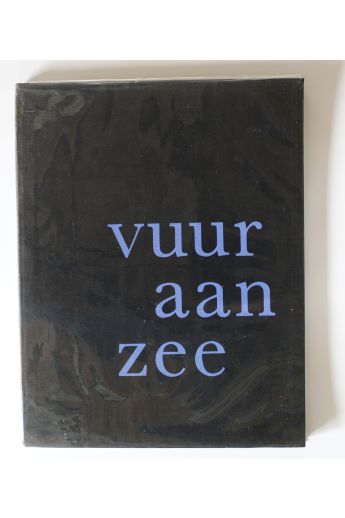 Vuur aan Zee€ 75,00
 -
Werken in de Bouw 1946 - 66€ 35,00


Werk van Cas Oorthuys
- 2006 Amsterdam tijdens den hongerwinter Oorthuys's most popular book on Goodreads.
- Antwerpen 1946