
Ed van der Elsken
auteur · fotograaf
Eduard (Ed) van der Elsken was een Nederlandse fotograaf en filmmaker, erkend als pionier van de street photography. Hij is vooral bekend om zijn werk in Parijs tijdens de jaren 1950, waar hij het dagelijks leven van de stad en de boheemse sfeer van Saint-Germain des Prés vastlegde. In 1954 droeg hij de visuele vertelling 'Beeldroman van het alledaagse' bij aan de kersteditie van het Drukkersweekblad Autolijn. Zijn werk onderzocht vaak menselijke interactie en stedelijke sfeer, en hij wordt geprezen om zijn invloedrijke fotoboeken en cinematografische stijl.[1,2,3,5,6,7,8]
Ed van der Elsken: The Camera Inside the Crowd
A critical biography of Dutch photographer and filmmaker Ed van der Elsken, tracing his formation in postwar Amsterdam, the cinematic photobook Love on the Left Bank, his travel and jazz books, his participatory street practice, experimental films, and the archive-led reassessment of his working methods.
Ed van der Elsken (1925–1990) made photographs in which observation becomes an encounter. In Paris cafés, Amsterdam streets, jazz clubs, Japan and his family life around Edam, the photographer is rarely a neutral witness: he talks, provokes, admires and sometimes directs. His books and films make that exchange between camera and subject visible, joining street photography to autobiography and cinematic sequence.
Identity and formation
Authority records identify him as Eduard van der Elsken, born in Amsterdam on 10 March 1925 and deceased in Edam on 28 December 1990. Getty ULAN records his work as photographer, filmmaker and cinematographer, while the NYPL Photographers’ Identities Catalog links the same person to ULAN, VIAF, RKD and museum records (Getty ULAN; NYPL PIC; BnF).
His training was practical and irregular. After an early ambition to become a sculptor, he learned through technical work, darkrooms, printing and photographing Amsterdam. Evelyn de Regt’s Leiden University PhotoLexicon study traces this formation and his entry into the postwar Dutch photography world (Leiden University, Depth of Field).
Paris and the photographic novel
Van der Elsken moved to Paris in 1950 and became close to young bohemians around Saint-Germain-des-Prés. That proximity produced Een liefdesgeschiedenis in Saint Germain des Prés (1956), published in English as Love on the Left Bank. He cast the Australian artist Vali Myers as “Ann” and shaped lived moments into a semi-fictional story of desire, jealousy and postwar drift. MoMA’s artist record documents his place in the museum’s exhibition history (MoMA).
The book’s importance lies in its construction. Photographs, captions, flashbacks, changing viewpoints and page turns make it cinematic rather than simply reportorial. The Stedelijk Museum’s account stresses this narrative method, while Sean O’Hagan describes a world at once real and created; a Frieze review calls the approach “theatrical documentary” (Stedelijk Museum Amsterdam; Aperture; Frieze). The photographs do not claim transparent neutrality. Casting, sequencing and point of view turn participation into narrative.
Books, travel and the street
The Paris book was followed by projects that repeatedly changed scale and subject: Bagara (1958), Jazz (1959), Sweet Life (1966), Eye Love You (1977), Avonturen op het land (1980), Amsterdam? (1984), Jong Nederland (1987) and De ontdekking van Japan (1988). Sweet Life grew from the long journey he made with Gerda van der Veen through Africa, Asia, Mexico and the United States. The Jeu de Paume survey treats books, films and slide shows as one connected practice rather than secondary vehicles for individual prints (Jeu de Paume).
Calling Van der Elsken merely a candid street photographer misses the interaction on which the pictures depend. He approached people, encouraged display and sometimes staged situations. Direct looks into the lens make many photographs collaborative and confrontational at once. His attraction to youth, lovers, performers and nonconformists was less a fixed sociological programme than a search for intensity and self-presentation. The resulting intimacy is energetic but not neutral: the photographer’s preferences shape who is selected and how each encounter unfolds.
Film and autobiography
Film extended the same method through movement, speech and his own unmistakable voice. Works including Welkom in het leven, lieve kleine (1963), De verliefde camera (1971), Een fotograaf filmt Amsterdam (1982) and Bye (1990) move between public chronicle, family record and self-portrait. EYE Filmmuseum’s account emphasizes montage, brief conversations and commentary as central to these films (EYE Filmmuseum). In Bye, made after his terminal cancer diagnosis, the photographer who had always acknowledged his presence before others turned the camera on his own dying.
Archive and reassessment
Archive research has corrected the idea that this work was produced by instinct alone. The Rijksmuseum and Nederlands Fotomuseum jointly acquired Van der Elsken’s private working archive in 2019; contact sheets, trial prints, notes, darkroom experiments and book dummies expose sustained selection and revision (Nederlands Fotomuseum).
The Rijksmuseum’s current 2026 exhibition research sharpens that view. It reports that individual projects could occupy him for years and presents unpublished notes, contact prints, darkroom experiments and newly discovered dummies alongside photographs and film. The evidence reveals experimentation, refinement and occasional doubt behind the apparent spontaneity (Rijksmuseum, “Ed van der Elsken. Up Close”).
Van der Elsken’s legacy therefore rests on two inseparable acts: entering the crowd and returning to the contact sheet. His photographs feel immediate because he accepted the risks of encounter; his books remain coherent because he edited that experience with patience and control.
Selected sources
Boeken
-
 Amsterdam?€ 43,00
-
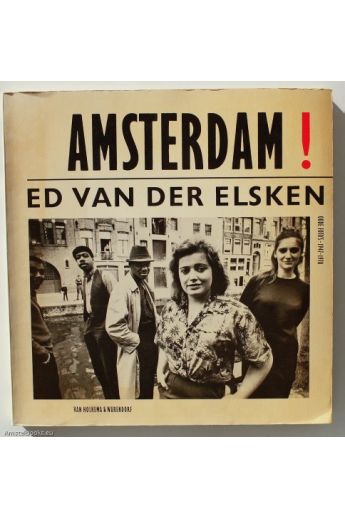 Amsterdam! Oude foto's 1947-1970€ 60,00
-
 Bijster no 3 - 1969€ 30,00
-
 Bijster no 4 - 1969€ 30,00
-
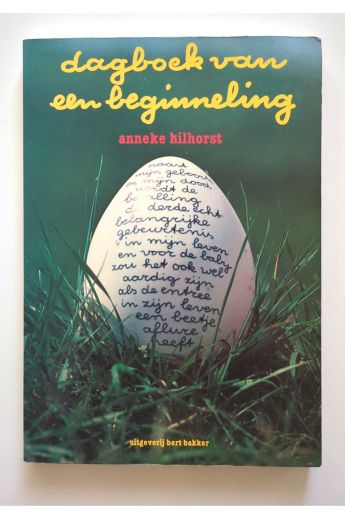 dagboek van een beginneling€ 15,00
-
 De Jong & Van Dam NV 1912 - 1962€ 400,00
-
 De ontdekking van japan€ 375,00
-
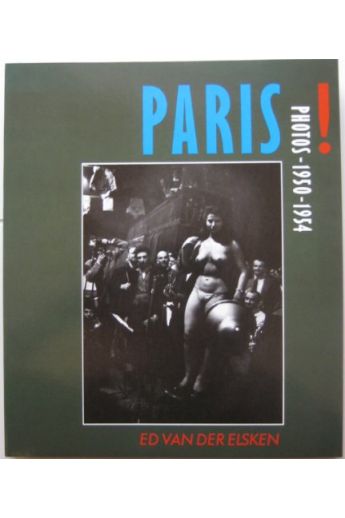 Elsken: PARIS 1950-1954€ 75,00
-
 Hallo!€ 55,00
-
 Hong Kong the Way It Was€ 170,00
-
 Jazz€ 20,00
-
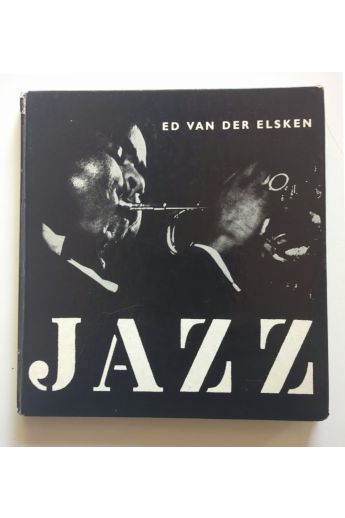 Jazz€ 150,00
-
 Jazz 1955 - 1959.61€ 35,00
-
 Jazz 1955 - 1959.61€ 45,00
-
 La douceur de vivre (Sweet Life)€ 280,00
-
 l'Amour ! Foto's 1950-1990€ 90,00
-
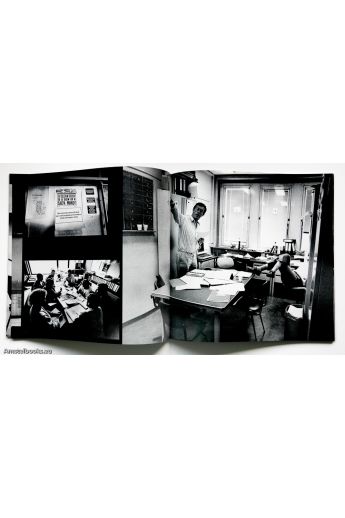 Natlab€ 125,00
-
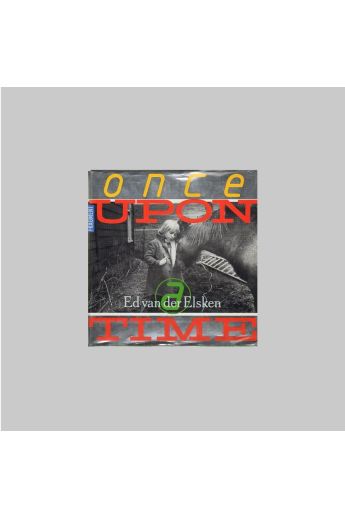 Once upon a time€ 95,00
-
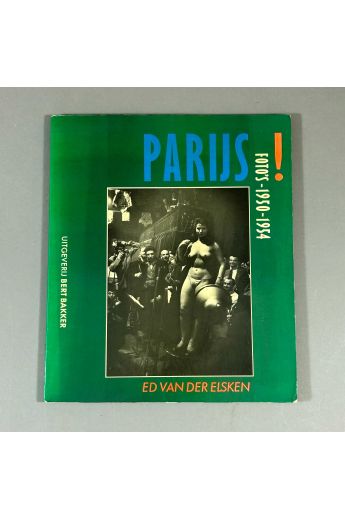 Parijs! Foto's 1950-1954€ 30,00
-
 Sweet Life€ 195,00
-
 Sweet Life€ 150,00
-
 Sweet Life€ 325,00


Werk van Ed van der Elsken
- 1954 Beeldroman van het alledaagse Contribution to the Drukkersweekblad Autolijn Christmas issue.
- 1956 Une histoire d'amour à Saint-Germain des Prés Famous photo book documenting his time in Paris.
- 1956 Een liefdesgeschiedenis in Saint Germain des Prés English title: Love on the Left Bank
- 1958 Bagara Photobook concerning travels in the African jungle
- 1966 Sweet Life Photobook about a round-the-world trip
- 1981 Parijs! Foto’s 1950-1954 Book about his years in Paris
- 1984 Amsterdam? Photobook compiling street photography of Amsterdam
- 1988 De ontdekking van Japan The Discovery of Japan
Tentoonstellingen
- 2025 Ed van der Elsken, een feest der herkenning
- 1953 Post-War European Photography
- 1966 Hee… zie je dat?
Prijzen
- 1988 David Roëll Prize
- 1971 staatsprijs voor filmkunst
Referenties
- Ed van der Elsken - Wikipedia. Wikipedia link
- Ed van der Elsken - Wikipedia. Wikipedia link
- Ed van der Elsken - Biografie. edvanderelsken.nl link
- Ed van der Elsken. B&G Wiki. beeldengeluid.nl link
- Ed van der Elsken (1925-1990) Fotograaf. absolutefacts.nl link
- Evelyn de Regt. University of Leiden. 1991 link
- Wikipedia link
- Ochre Space Portfolio link