
Ata Kandó
auteur · fotograaf
Ata Kando (geboren als Etelka Görög) was een vooraanstaande Nederlands-Hongaarse fotograaf die bekend stond om haar diverse en moedige oeuvre. Ze begon haar fotografische praktijk in de jaren 1930, waarbij ze zich aanvankelijk richtte op kinderfotografie in Budapest voordat ze in 1932 naar Parijs verhuisde. Gedurende haar carrière werkte ze als modefotograaf en documenteerde zij belangrijke historische gebeurtenissen, waaronder het fotograferen van vluchtelingen in 1956. Haar reizen brachten haar naar de Amazone om landschappen en inheemse culturen vast te leggen, evenals naar locaties zoals Paestum. Ze wordt hoog gewaardeerd om haar poëtische perspectief en haar vermogen om zowel het intieme als het epische vast te leggen. Een belangrijke mijlpaal in haar carrière was de creatie van een dummy voor 'Kalypso & Nausikaä' in 1956, die uiteindelijk in 2004 als gepubliceerd boek verscheen. Ze wordt beschouwd als een van de eerste generatie grote Nederlandse vrouwelijke fotografen van de 20e eeuw.[1,3,4,5,6]
- mode
- vluchtelingen
- landschappen
- inheemse volkeren
- mythologie
Ata Kandó: photographs of childhood, refuge and myth
An introduction to Ata Kandó’s work, from her photographs of Hungarian refugees to the collaborative, child-centred photobook projects that joined family performance with classical narrative.
Ata Kandó—born Etelka Görög—was a Hungarian-born photographer who became a naturalised Dutch citizen. The Bibliothèque nationale de France authority record gives her birth as 17 September 1913 in Budapest and her death as 14 September 2017 in Bergen, Netherlands; it identifies her as a photographer and draughtswoman. The same record cites her 2004 Kalypso & Nausikaä, foto's naar Homerus' Odyssee among the sources used for the authority file. (Bibliothèque nationale de France)
Kandó’s work moves between photographs made with children, collaborative book projects and documentary images shaped by post-war Europe. In its 2017 memorial, the Stedelijk Museum Amsterdam places her among the first generation of major twentieth-century women photographers in the Netherlands. It notes both her affinity for photographing children and the photographs of Hungarian refugees that she made with Violette Cornelius in 1956. (Stedelijk Museum Amsterdam)
Work held in an archive
Kandó’s work survives not only as individual prints and books. The Nederlands Fotomuseum names the Ata Kandó archive among its more than 175 complete photography archives, within a collection of over 6.5 million objects. The museum describes its collection as particularly focused on twentieth-century analogue and documentary photography, and as including negatives and slides alongside other photographic material. (Nederlands Fotomuseum) That archival setting is valuable for approaching a practice that circulated through photographs, projects and publications rather than through single images alone.
The Stedelijk memorial gives a compact account of Kandó’s professional connections and institutional presence. After photographer Emmy Andriesse’s death, Kandó made prints from Andriesse’s photographs for the museum. The memorial also records that five photographs from the 1956 refugee series were acquired during the early years of the Stedelijk’s photography collection. Later acquisitions included work from a series the museum describes as concerning Indigenous peoples, as well as the original material for Droom in het Woud (1957). (Stedelijk Museum Amsterdam)
A photobook made through play
Kalypso & Nausikaä is a particularly clear entry point to Kandó’s book work. An account on the photographer’s website recalls a trip from Amsterdam to Paestum, Italy, with her three children: Tom played Ulysses, while the twins Juliette and Madeleine enacted characters from Homeric stories. It says the photographs were made near sunrise or sunset, with improvised costumes and locations prepared around the children’s holiday. (Ata Kandó Photographer)
The same account says that the completed dummy remained on a shelf for almost half a century before its publication by De Verbeelding in 2004. (Ata Kandó Photographer) The book’s interest therefore lies not simply in its Homeric reference, but in the way a family journey, children’s performances and staged photography were brought together as a sustained project.
The Stedelijk places Droom in het Woud beside this later-published project: it records the book’s 1957 publication, the acquisition of its original material, and a 2013 reissue. (Stedelijk Museum Amsterdam) Read together, the two titles show why Kandó’s books reward attention to sequence, collaboration and the survival of photographic working material.
Beyond one mode of photography
Kandó should not be reduced to the imaginative photographs made with children. The Stedelijk’s account documents her work with Cornelius on the Hungarian-refugee photographs, its later acquisitions from the series it calls Indianen, and Kandó’s role in printing Andriesse’s photographs. (Stedelijk Museum Amsterdam) These distinct strands make clear that her practice connected collaborative storytelling, photographic labour and socially attentive image-making.
For readers encountering Kandó through a book, Kalypso & Nausikaä offers one route into that larger body of work: a project rooted in myth and play, but preserved alongside photographs with very different historical and professional contexts. (Ata Kandó Photographer; Stedelijk Museum Amsterdam)
Sources
Boeken
-
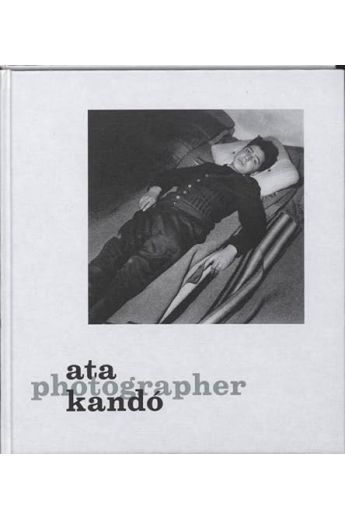 Ata Kando - Photographer€ 100,00
 -
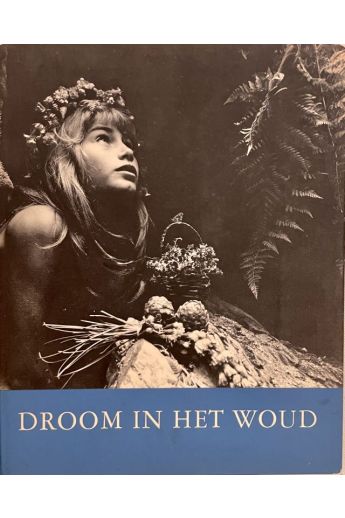 Droom in het woud€ 153,29
 -
 Vuur aan Zee€ 75,00


Werk van Ata Kandó
- 2004 Kalypso & Nausikaä Foto's naar Homerus' Odyssee
- 1962 Vuur aan Zee Photography contribution
Tentoonstellingen
- 2016 Ata Kando