
Helmut Newton
fotograaf
Helmut Newton (geboren als Helmut Neustädter) was een Duits-Australische fotograaf die in de tweede helft van de 20e eeuw uitgroeide tot een van de meest invloedrijke en provocerende figuren in de modefotografie. Hij werd in 1920 geboren in een Joodse familie in Berlijn, vluchtte voor de nazi-vervolging en vestigde zich uiteindelijk in Australië voordat hij naar New York en later Parijs verhuisde. Newton staat bekend om zijn erotisch geladen zwart-wit- en kleurenbeelden, die regelmatig verschenen in high-fashion publicaties zoals Vogue. Zijn stijl verkende vaak thema's als macht, seksualiteit en het vrouwelijk lichaam, waarbij hij cinematografische esthetiek combineerde met commerciële mode. Hij was een productieve maker wiens beelden iconisch blijven in zowel de kunst- als de modegeschiedenis.[1,2,3,4,5,6,7,8,9,10]
- mode
- erotiek
- machtsdynamiek
- vrouwelijk lichaam
Helmut Newton: fashion photography staged as a charged encounter
A source-grounded introduction to Helmut Newton’s passage from Berlin apprenticeship and exile to the decisive photobook sequence of White Women, Sleepless Nights, and Big Nudes.
A photographer of scenarios, not simply clothes
The authority record identifies Helmut Newton (1920–2004); institutional accounts establish that he was born Helmut Neustädter in Berlin, trained with the photographer Yva, fled in 1938, and became an Australian citizen after wartime service (VIAF; International Center of Photography). Those facts matter because Newton’s mature work is neither an unbroken Paris-fashion story nor a neutral record of glamour: it is a deliberately constructed, transnational practice in which fashion, theatre, travel and danger meet.
In Berlin, Yva’s apprenticeship (1936–38) gave Newton experience in portraiture, nude and fashion photography. The Newton Foundation’s chronology places his escape from Berlin in 1938, his work in Singapore, arrival in Australia in 1940, and the name change in 1946; it also records the 1961 move back to Paris and a full-time position at French Vogue (Helmut Newton Foundation). ICP likewise describes the passage from Singapore internment and Australian army service to an Australian citizenship, and identifies fashion commissions—including Vogue—as the field in which Newton became a major figure (ICP).
For a photobook reader, the crucial point is that Newton made the magazine assignment elastic. ICP notes his preference for locations outside the studio—mansions, villas and hotels—and identifies film noir, Expressionist cinema, surrealism and S&M among the references shaping a conspicuously staged, voyeuristic imagery (ICP). The clothes can be exactingly described, but the photographs often behave as a scene with an implied before and after: a woman posed in an interior, a hard flash, a threshold, a surveillance-like angle. That tension helps explain why the pictures have repeatedly provoked debate rather than settling comfortably into fashion illustration.
The three-book hinge
Newton’s first three major books are the most useful compact route into this method. The Foundation dates White Women to 1976, Sleepless Nights to 1978 and Big Nudes to 1981, while documenting their multiple contemporaneous national editions (Helmut Newton Foundation). This is important bibliographically: title, publisher and language are not interchangeable across the sequence.
The Staatliche Museen zu Berlin’s exhibition devoted to these publications describes them as works on the boundary between fashion and nude photography. It specifies that White Women appeared when Newton was 56; that its clothed/undressed diptychs anticipated Big Nudes and Naked and Dressed; and that Sleepless Nights deliberately interleaves black-and-white and colour images, where fashion photographs can also read as portraits or crime-scene-like tableaux (Staatliche Museen zu Berlin). In that account, Big Nudes secured Newton’s canonical position; it has remained in print since 1981 and appeared in many languages (Staatliche Museen zu Berlin).
That three-book sequence is a better starting point than a generic label such as “provocative.” It shows Newton using editing, scale, recurrence and the relation between dress and nudity to turn editorial photography into a sustained body of work. The Foundation’s record of a 2000 Berlin retrospective that travelled internationally, followed by the 2003 agreement creating the Helmut Newton Foundation with the Prussian Cultural Heritage Foundation, indicates the institutional framework through which that body of work was subsequently consolidated (Helmut Newton Foundation).
Reading Newton in the bookshop
Newton is most revealing on the page when one attends to sequencing and edition rather than extracting a single sensational image. White Women, Sleepless Nights and Big Nudes retain the friction between commercial commission and autonomous photographic statement: bodies and garments are presented with precision, but the setting and pose keep refusing a merely descriptive reading. For collectors and readers, the relevant questions are therefore concrete ones—language edition, publisher, sequence, reproduction and whether an image belongs to a diptych or recurring scenario—not simply whether a print is “iconic.”
Sources consulted
Boeken
-
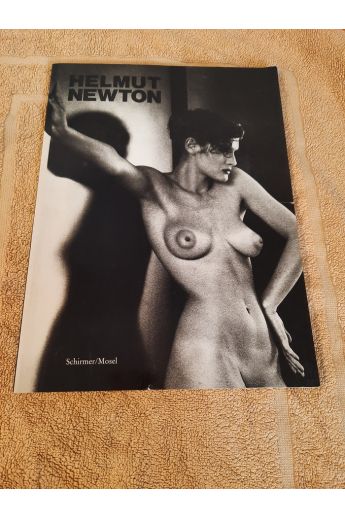 Helmut Newton€ 17,00
 -
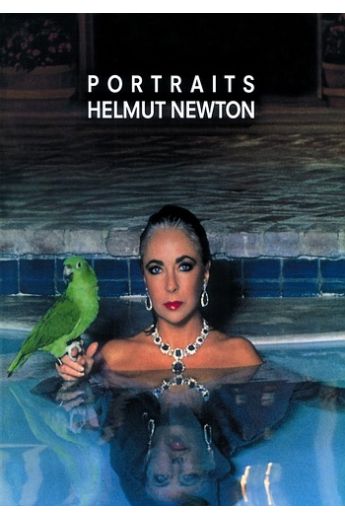 Helmut Newton: Portraits€ 22,00
 -
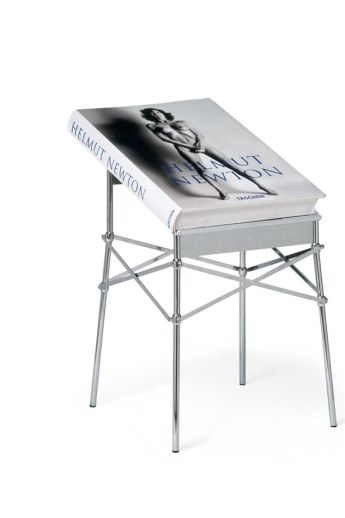 Helmut Newtons SUMO€ 6.517,00
 -
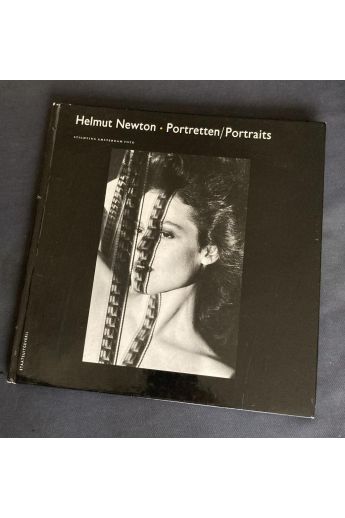 Portretten Portraits€ 11,00
 -
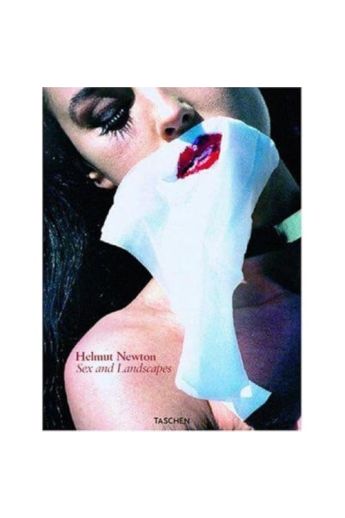 sex and Landscapes€ 28,00
 -
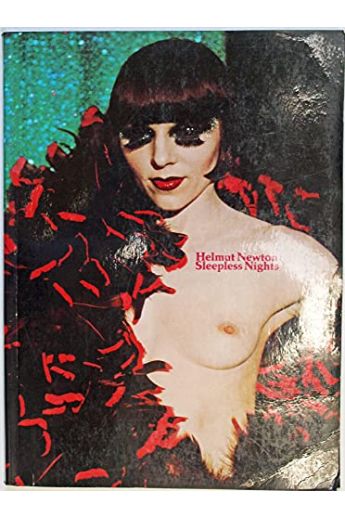 Sleepless Nights€ 20,00


Werk van Helmut Newton
- 1986 Portretten / Portraits Dutch and English edition.
Referenties
- Helmut Newton link
- Biography link
- Helmut Newton link
- Helmut Newton link
- Helmut Newton link
- Helmut Newton link
- Newton, Helmut (1920-2004) link
- Helmut Newton (born Helmut Neustädter; 31 October 1920 - 23 January 2004) link
- Happy Birthday to our founder Helmut Newton link
- Helmut Newton (1920-2004) link