
Koen Wessing
auteur · fotograaf
Koen Wessing (1942–2011) was een prominente Nederlandse fotograaf die bekend stond om zijn evocatieve en sociaal bewuste fotojournalistiek. Geboren in Amsterdam tijdens de Duitse bezetting, begon hij in 1963 zijn carrière als freelance fotograaf na een leertijd bij Ed van der Elsken. Wessing verkreeg internationale erkenning voor het documenteren van belangrijke politieke gebeurtenissen, waaronder de protesten van mei 1968 in Parijs, de militaire coup in Chili in 1973, en diverse conflicten en sociale kwesties in Europa, Afrika, Azië en Latijns-Amerika. Zijn werk kenmerkt zich door een focus op 'de verliezers'—de gemarginaliseerden, de onderdrukten en de slachtoffers van de geschiedenis. Hij stond bekend om zijn vermogen om menselijke waardigheid vast te leggen te midden van onrust. Wessing ontving verschillende onderscheidingen, waaronder de Alblasprijs in 1989, en zijn uitgebreide archief wordt bewaard in belangrijke instellingen zoals het Stedelijk Museum Amsterdam en het Rijksmuseum.[1,2]
- fotojournalistiek
- politieke protesten
- sociale rechtvaardigheid
- mensenrechten
Koen Wessing: The Indelible Witness
Koen Wessing (1942–2011) was a Dutch photojournalist whose politically committed work followed protest, coups, decolonization, war, and everyday survival across several continents.
Koen Wessing (26 January 1942–2 February 2011) was a Dutch photographer and photojournalist born and deceased in Amsterdam. The Stedelijk Museum Amsterdam gives his complete life dates and places, while the Jeu de Paume situates his work across the political history of the postwar period: decolonization, violence in Latin America, the collapse of the Soviet bloc, war in Yugoslavia, apartheid in South Africa, and China’s resurgence.
Formation and a mobile practice
Wessing taught himself photography and worked for two years as an assistant to Ed van der Elsken before establishing his own practice (Jeu de Paume). He began as a freelance photographer in 1963. From the outset, mobility and political events shaped his work: he photographed the May 1968 protests in Paris and the 1969 occupation of the University of Amsterdam’s Maagdenhuis. The story of his improvised bridge for moving exposed film past a police blockade captures both his resourcefulness and his determination to keep images circulating.
Wessing’s subject was not politics in the abstract but its effect on bodies and daily life. The Jeu de Paume describes his photographs as showing the “god-forsaken of the earth” without dehumanizing them or reducing them to victims. This distinction is essential to his method. Grief, waiting, fear, and resistance appear through faces and gestures, while the people photographed retain their individuality.
Chile and Latin America
Wessing became internationally known for his photographs of the September 1973 military coup against Salvador Allende’s government in Chile. The pictures were rapidly gathered in the photobook Chili, September 1973 and became central to his reputation. His engagement with Latin America continued in Nicaragua, Guatemala, and El Salvador. Paradox highlights his coverage of the Chilean coup, the Nicaraguan insurrection, and the massacre at the funeral of Archbishop Óscar Romero in El Salvador as defining examples of his politically engaged work.
These photographs do more than identify an event. Wessing repeatedly directs attention toward civilians, mourners, and people searching for the disappeared. His images preserve the instability of the moment—the fact that those within it do not yet know how events will end. That quality helps explain why the work can remain forceful after its immediate news context has passed.
China and Tibet
By the 1980s Wessing’s attention increasingly included China. An in memoriam by Dick Breebaart records that he traveled through the country for nine months with his wife Agnes and their baby Marie, producing what Breebaart regarded as one of his finest reportages (Villamedia). This body of work broadened rather than abandoned Wessing’s political vision: daily encounters and social relations became a way to look beyond a country’s official self-image.
The publication described here, Koen Wessing in China en Tibet, accompanied a Stedelijk Museum Amsterdam exhibition held from 19 September to 1 November 1987. The Rijksmuseum Research Library catalogues the bilingual Dutch-English volume as an exhibition catalogue published in Amsterdam by the Stedelijk Museum in 1987, authored by Els Barents with Wessing and the museum listed as contributors. Its subject period is 1986, linking the publication to photographs made after the extended journey.
This precise description matters bibliographically. The volume is both a photobook sequence and documentation of a specific museum exhibition; it should not be conflated with Wessing’s later China publications. Its value lies in the way the museum context gives form to a sustained reportage, allowing individual encounters to accumulate into a social portrait.
An ethics of proximity
Wessing worked close to events without pretending that proximity produced a complete explanation. His photographs are direct, but they are not simplistic. They often hold public violence and private emotion in the same frame, creating images that function as records while retaining uncertainty.
Institutional collections preserve the range of this practice. The Stedelijk’s online catalogue includes photographs from 1973, 1978, 1980, 1985, and 1986, among them an image of the Romero funeral and a portrait of Agnes and Marie (Stedelijk Museum). The Jeu de Paume’s retrospective title, The Indelible Image, is apt: Wessing’s strongest photographs remain memorable because political history is made visible through particular human beings rather than through spectacle alone.
Sources
Boeken
-
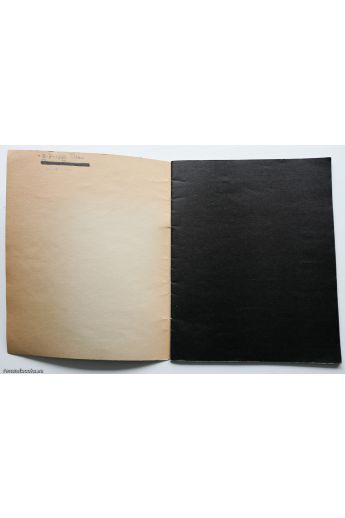 Chili September 1973€ 675,00
 -
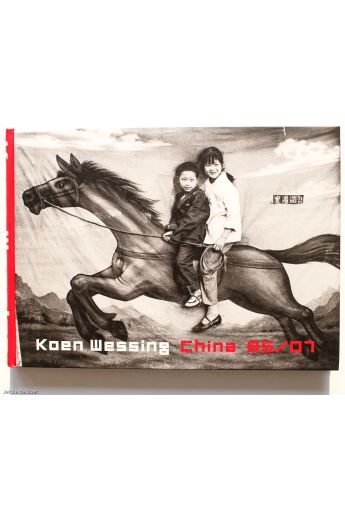 China 85/07€ 45,00
 -
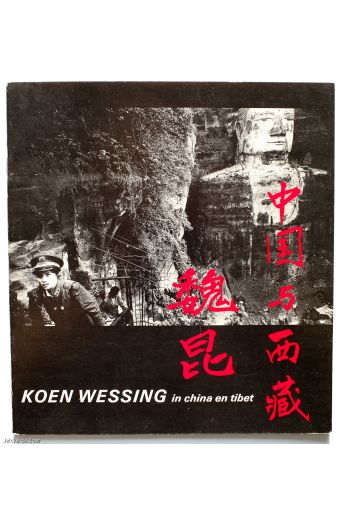 Koen Wessing in China en Tibet€ 25,00
 -
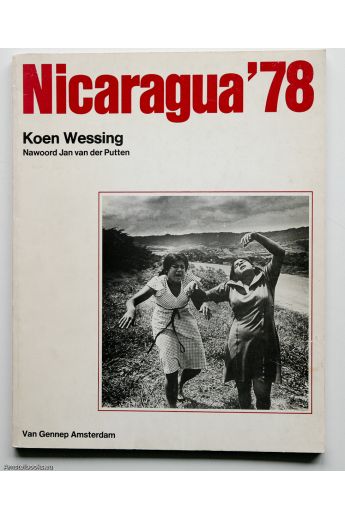 Nicaragua '78€ 56,00


Werk van Koen Wessing
- 1987 Koen Wessing in China en Tibet Exhibition catalog/monograph.
- 1973 Chili september 1973 Documenting the military coup in Chile.
Tentoonstellingen
- 1987 Koen Wessing in China en Tibet
- 2000 Overzichtstentoonstelling Koen Wessing
Prijzen
- 1989 Alblasprijs