
Lee Friedlander
auteur · fotograaf
Lee Friedlander (geboren in 1934) is een Amerikaanse fotograaf en kunstenaar die bekendstaat om zijn invloedrijke visuele taal van het 'social landscape'. Hij begon zijn carrière eind jaren 40 en werd een prominente figuur in de hedendaagse fotografie door gefragmenteerde, asymmetrische glimpjes van het stedelijke leven vast te leggen, waaronder reflecties in etalages en straatscènes. Friedlander speelde een cruciale rol bij het publiekelijk onder de aandacht brengen van het werk van E.J. Bellocq; hij ontdekte de negatieven van Bellocq (sommige bronnen suggereren dat dit in een kringloopwinkel was) en begeleidde de druk en publicatie van 'Storyville Portraits' in 1970 voor het Museum of Modern Art. Zijn eigen werk kenmerkt zich door een speelse maar aangrijpende organisatie van visuele informatie, waarbij vaak de nadruk ligt op de chaos van het stadsleven.[1,3]
Lee Friedlander: The Social Landscape Made into Books
A source-grounded account of Lee Friedlander’s identity, formation and “American social landscape,” with close attention to self-reflexive framing, photobook editing, music photography, industrial commissions and his role in the reception of E. J. Bellocq.
Identity, training and the “social landscape”
Lee Friedlander was born in Aberdeen, Washington, on 14 July 1934. The identity is unusually well triangulated: the Photographers’ Identities Catalog lists “Friedlander, Lee (American, born 1934)” (PIC, entry 960); the Getty Union List of Artist Names identifies him as Lee Norman Friedlander, ULAN 500014327 (Whitney Museum, Getty record); and the French higher-education authority file links the name to VIAF 41852411 and ISNI 0000000107995125 (IdRef). The Smithsonian American Art Museum independently gives Aberdeen as his birthplace and identifies New York as a place of activity (SAAM).
Friedlander became interested in photography as a teenager and studied at the Art Center School in Los Angeles from 1953 to 1955 before beginning freelance work. The International Center of Photography records early magazine publication in Esquire, Art in America and Sports Illustrated, a first solo exhibition at George Eastman House in 1963, Toward a Social Landscape there in 1966, and MoMA’s New Documents in 1967 (ICP). That sequence matters: it connects commercial work, museum exhibition and the phrase most closely associated with his practice without pretending that one event created the work.
Friedlander called his subject the “American social landscape.” The Whitney Museum describes an independent body of photographs made alongside magazine and record-industry assignments: people, objects, streets and landscapes assembled through unexpected overlaps, reflections and obstructions (Whitney Museum). ICP similarly emphasizes his attention to the picture plane. Store windows, street signs, parked cars, fences, television sets, shadows and reflections are not clutter around a supposedly central subject. They are the structure through which a place becomes visible.
A photograph that notices its own making
Friedlander’s pictures often let the photographer intrude. His shadow falls across a person or monument; a shop window returns his reflection; a car window divides a view into incompatible planes. The result is not conventional self-expression. It is a reminder that documentary photography is made from a position, through framing, at a particular instant.
This is why apparent disorder in his work rewards sustained looking. A sign may interrupt a face, a branch may echo a street line, or a television image may occupy an otherwise anonymous motel room. Fraenkel Gallery’s overview connects the street photographs to The Little Screens, begun in the 1960s, and to the self-portraits in which shadow and reflection become active pictorial elements (Fraenkel Gallery). The humour can be quick, but the construction is exacting.
MoMA’s collection record demonstrates the range and duration of this practice, from 1950s portraits of musicians to later street, landscape and domestic pictures, and documents the museum’s 2005 retrospective and 480-page catalogue (MoMA). The point is not simply prolific output. Friedlander repeatedly revisits bodies of negatives and gives them new form through books.
The book as the working form
The Whitney notes that Friedlander often photographs without a predetermined project and later compiles pictures into books (Whitney Museum). That reversal is crucial. A book need not illustrate a proposal fixed in advance; editing can discover a subject inside years of looking.
Several recurring concerns became distinct publications. Self-Portrait first appeared in 1970 and was reissued by MoMA in 2005. The American Monument brought statues and their everyday surroundings into collision, complicating official commemoration with signs, traffic and incidental urban life. Factory Valleys emerged from a 1979–80 Akron Art Museum commission to photograph the industrial Ohio River valleys of Ohio and Pennsylvania, a project documented in the Getty record reproduced by the Whitney (Whitney Museum). Flowers and Trees, Sticks & Stones, At Work and later archive-based sequences show that plants, buildings and labour could be treated with the same restless attention as streets.
Fraenkel Gallery also identifies Friedlander as a designer and publisher of many of his own monographs and describes the six-volume Human Clay suite, begun in 2017, as an extensive re-editing of street and environmental portraits from his archive (Fraenkel Gallery). Such projects make chronology less straightforward: the date of a negative, the date of a print and the date when a sequence became a book can differ substantially.
For readers and collectors, edition-level distinctions therefore matter. Self-Portrait in its original and reissued forms, later editions of The American Monument, and books drawn retrospectively from older negatives do not offer identical encounters. Format, printing, image order and the relation between spreads determine how Friedlander’s compressed frames accumulate.
Music, New Orleans and Bellocq
Music was not a minor sideline. ICP records Friedlander’s freelance career, while MoMA’s online holdings begin with 1950s photographs of Count Basie, Ruth Brown, Mahalia Jackson and Thelonious Monk (ICP; MoMA). Fraenkel Gallery notes that his photographs of jazz, country and blues performers often appeared on album covers and were later gathered in American Musicians (1998) (Fraenkel Gallery). These portraits join professional commission to a long engagement with American vernacular culture.
Friedlander also played a decisive role in the modern reception of E. J. Bellocq. ICP states that he printed Bellocq’s early-twentieth-century New Orleans negatives. MoMA’s 1970 exhibition and publication record identifies E. J. Bellocq: Storyville Portraits as a 96-page book issued in conjunction with the museum presentation (MoMA exhibition record). Friedlander’s role should be described precisely: Bellocq made the negatives; Friedlander’s printing helped establish the form in which many later viewers encountered them. The episode is also a lesson in photobook mediation—authorship, printing, editing and institutional presentation need not belong to the same person.
Reading Friedlander
The most productive way to read a Friedlander book is slowly and structurally. Follow repeated obstructions, reflections and frames; notice when a shadow turns the photographer into a character; compare how one image’s geometry answers the next. A Friedlander photograph can seem instantaneous, but a Friedlander book makes that instant part of a longer visual syntax.
His career joins street observation to self-portraiture, music, monuments, industrial landscapes, family and vegetation without requiring one subject to stand for all the others. The continuity lies in an ability to organise dense information and in a willingness to let the visible world resist clean hierarchy. The books make that resistance readable.
Sources consulted
- PIC, Photographers’ Identities Catalog
- IdRef authority record, including VIAF and ISNI
- Whitney Museum of American Art profile and Getty ULAN data
- Smithsonian American Art Museum artist record
- International Center of Photography archive record
- Museum of Modern Art artist and publication record
- MoMA, E. J. Bellocq: Storyville Portraits
- Fraenkel Gallery artist overview
Boeken
-
 Flowers and Trees€ 913,04
-
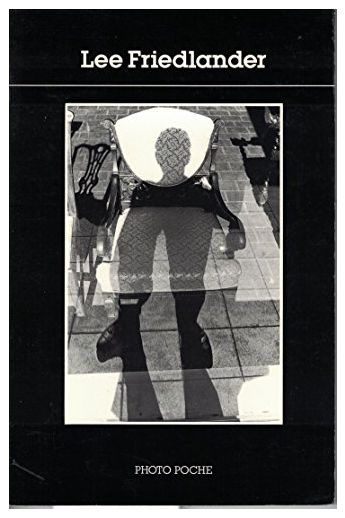 Lee Friedlander€ 25,00
-
 Lee Friedlander at work€ 28,00
-
 New Mexico€ 250,00
-
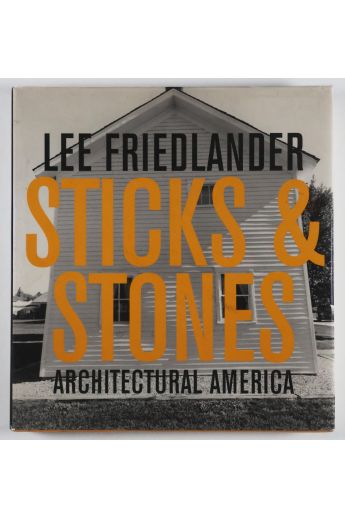 Sticks & Stones€ 60,00


Werk van Lee Friedlander
- 1970 Storyville Portraits: Photographs from the New Orleans Red-Light District, Circa 1912 Co-authored/edited with E.J. Bellocq; Friedlander printed the photographs.