
Robert Delpire
auteur
Robert Delpire (1926–2017) was een vooraanstaande Franse kunstuitgever, redacteur, curator en filmproducent gespecialiseerd in documentairefotografie. Hij begon zijn carrière als medische student voordat hij in 1950 het culturele tijdschrift 'Neuf' oprichtte. In 1955 richtte hij Delpire & Co op, dat een belangrijke uitgeverij werd voor grote fotografen zoals Henri Cartier-Bresson, Robert Frank en Josef Koudelka. Delpire speelde een cruciale rol bij het verheffen van fotografie tot een kunstvorm door middel van zijn gecureerde publicaties en tentoonstellingen. Hij was van 1982 tot 1996 directeur van het Centre National de la Photographie (nu le Jeu de Paume) en richtte in 2002 de Henri Cartier-Bresson Foundation op. Zijn democratische benadering van fotografie, met name door de 'Photo Poche'-collectie, was bedoeld om hoogwaardige fotografische werken toegankelijk te maken voor een breed publiek.[1,2]
Robert Delpire: Editing Photography into Public Culture
A critical biography of Robert Delpire, the French publisher, editor, curator and film producer who transformed photographic culture through Neuf, Éditions Delpire, Robert Frank’s Les Américains, the Centre National de la Photographie and the accessible Photo Poche series.
Robert Delpire (1926–2017) changed photography not by making pictures but by deciding how they would be encountered. As a publisher, magazine editor, art director, gallerist, film producer and curator, he worked between image and audience: sequencing photographs into books, placing them beside literature and illustration, building exhibitions, and creating inexpensive monographs for readers beyond specialist circles. His career demonstrates that photographic culture is shaped not only at the moment of exposure, but also through editing, typography, printing, distribution and institutional access.
Identity and life dates
The Robert Delpire associated with Neuf, Éditions Delpire, the Centre National de la Photographie and the Photo Poche series is consistently identified as the French publisher born in Paris on 24 January 1926 and deceased there on 26 September 2017. The NYPL Photographers’ Identities Catalog indexes “Delpire, Robert” as French, 1926–2017; VIAF 44297739 gives the same authorized name and dates, and the Bibliothèque nationale de France maintains the corresponding national authority record. No distinct Getty ULAN identity was located in the current public search results, so the PIC, VIAF and BnF concordance provides the firmer authority chain.
Delpire began far from an established art-publishing career. While studying medicine in Paris, he took over a modest Maison de la Médecine bulletin and transformed it into Neuf, an ambitious cultural review. Accounts differ slightly on whether to date its foundation to 1950 or describe him as twenty-two when he assumed the work, but they agree on the decisive fact: a medical-student publication became a meeting place for photography, literature and drawing. Contributors included writers such as André Breton, Jean-Paul Sartre, Henry Miller and Jacques Prévert, and photographers including Brassaï, Henri Cartier-Bresson, Robert Doisneau, Werner Bischof and Robert Frank (Delpire & Co; Aperture).
The editor as collaborator
Delpire’s importance lies partly in the kind of editor he became. He did not treat photographs as interchangeable illustrations for a pre-existing text. He worked with photographers on selection, sequence, design and the physical logic of the book. Magnum’s memorial account describes an active collaborator who travelled with Inge Morath in Iran, designed books and wrote an essay for Josef Koudelka’s Exiles. Across his career he published or designed books with Cartier-Bresson, Robert Capa, René Burri, Abbas, Harry Gruyaert and Koudelka (Magnum Photos).
This collaborative model treated the photobook as an authored construction. Cropping, paper, typography, image size and page turns could change how a body of work was understood. In a 2012 interview republished by Aperture, Delpire distinguished sharply between reading photographs on a wall and turning the pages of a book. A book presents each photograph as a controlled offering in a sequence; an exhibition permits multiple sightlines and viewing orders. His sensitivity to that difference helps explain why he moved so fluently between publishing and curating without assuming that one format could simply copy the other (Aperture).
The Americans and the risk of publication
The most frequently cited example of Delpire’s editorial judgment is Robert Frank’s Les Américains. He published the French edition in 1958 as part of the Encyclopédie Essentielle series. Frank’s photographs of flags, cars, lunch counters, roads, racial division and public ritual rejected the reassuring picture of postwar American prosperity. In Delpire’s edition, texts by writers accompanied the sequence, placing the work within a broader editorial framework.
The publication was initially a commercial failure, according to the history maintained by Delpire & Co, but it became a landmark in photographic publishing (Delpire & Co). Its later status can obscure the original risk. Delpire committed design and publishing resources to work that was formally unsettled, politically uncomfortable and not yet protected by reputation. That willingness to create a public form for difficult work recurred in his relationships with William Klein and Josef Koudelka, from Klein’s Moscow and Tokyo books to Koudelka’s Gitans and later Chaos (Aperture).
Publishing beyond photography
Delpire’s visual culture was wider than the canonical photobook. He published illustrators and children’s books, including André François’s Les Larmes de crocodile and the French edition of Maurice Sendak’s Where the Wild Things Are. He served as artistic director of L’Œil, opened a gallery at 13 rue de l’Abbaye in Paris in 1963, and exhibited photographers, illustrators and graphic designers. This breadth matters because it situates his photography books within a larger understanding of graphic narrative and visual communication rather than in an isolated fine-art category (Delpire & Co).
Commercial work also financed cultural independence. His advertising agency employed photographers he respected, including Marc Riboud, William Klein and Sarah Moon, and handled major clients such as Citroën. The relationship between commerce and art was not free of tension, but it gave Delpire resources and a practical command of production. He understood how images operate in public, how a printed object competes for attention and how design can preserve rather than overwhelm a photograph.
Film, gallery and institution
Delpire’s work in film extended his interest in constructed visual sequences. He produced William Klein’s Cassius le grand and Qui êtes-vous, Polly Maggoo?, projects that move between documentary observation, media critique and staged performance. His gallery likewise provided a physical venue for photographers and graphic artists whose work he had encountered through publishing.
The largest institutional phase began in 1982, when culture minister Jack Lang asked him to create and direct the Centre National de la Photographie. Delpire remained director until 1996 and organized more than 150 exhibitions at the Palais de Tokyo. The institution became a major French venue devoted to photography, allowing him to apply editorial intelligence at architectural scale (Delpire & Co; Aperture).
His curatorial method did not reduce exhibitions to enlarged books. As he explained to Aperture, wall-based viewing requires attention to distance, competing images, scale and multiple paths. The distinction is central to his achievement: Delpire understood books and exhibitions as separate technologies of attention.
Photo Poche and access
At the Centre National de la Photographie, Delpire created Photo Poche, a series of compact, moderately priced monographs. Each volume gave a broad audience access to a photographer’s work in a carefully edited portable format. Magnum characterizes this as a democratic strategy that disseminated the work of hundreds of photographers (Magnum Photos).
The series condensed Delpire’s principles. Small format did not have to mean casual editing; lower price did not require indifference to sequence or reproduction. Photo Poche placed photographic history into readers’ hands one volume at a time. Its importance lies not only in the individual titles but in the cumulative argument that photography deserved an accessible library.
Recognition and legacy
Delpire received the International Center of Photography’s Infinity Award for Lifetime Achievement, the German Society for Photography’s Cultural Award with Sarah Moon, and the Royal Photographic Society’s Centenary Medal. He also helped establish the Fondation Henri Cartier-Bresson in 2002, extending a friendship and working relationship that had lasted for decades (Magnum Photos).
Awards, however, describe only part of his legacy. Delpire gave photographic work durable forms. He recognized projects before consensus formed around them, helped photographers turn archives into sequences, and built institutions that made those sequences available. The books connected to him in this catalogue—works on Josef Koudelka, Exiles, Chaos and Sarah Moon’s Coincidences—belong to that long editorial history.
Delpire’s career is therefore a history of mediation in the strongest sense. He stood between photographer and reader, but not as a barrier. Through design, judgment and distribution, he made the distance productive. His lasting subject was not photography alone; it was the public life a photograph can acquire when an editor gives it the right scale, sequence and place.
Selected sources
Boeken
-
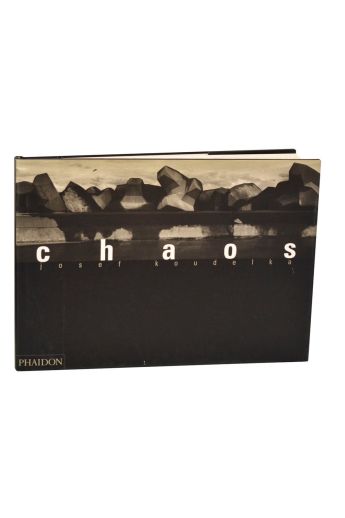 Chaos€ 1.779,50
-
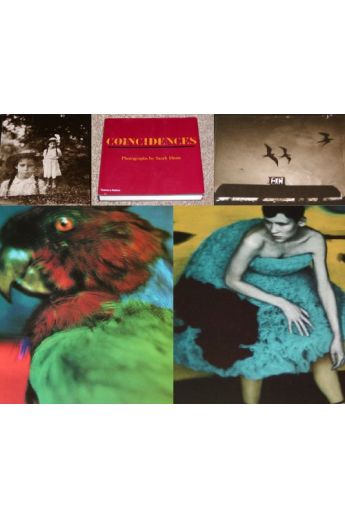 Coincidences€ 220,00
-
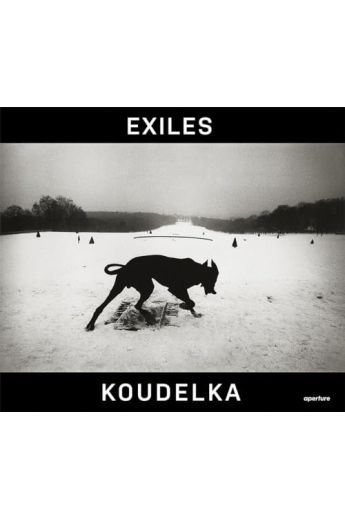 Josef Koudelka: Exiles€ 40,61
-
 Koudelka€ 85,00


Werk van Robert Delpire
- 2007 Koudelka Co-authored with Michel Frizot.
- Photo Poche First collection of pocket-sized books dedicated to photography.
Tentoonstellingen
- 1977 E.J. Marey
Prijzen
- Prix Nadar
- Infinity Award
- Cultural Award
- Centenary Medal