
Martin Parr
auteur
Martin Parr is een gerenommeerde Britse documentairefotograaf, fotojournalist en verzamelaar van fotoboeken. Bekend om zijn satirische en antropologische benadering van het hedendaagse leven, verkent zijn werk vaak sociale klassen, toerisme en subculturen met een kenmerkende visuele stijl gekenmerkt door verzadigde kleuren en groothoekperspectieven. Hij is al lange tijd lid van het Magnum Photos-agentschap en heeft zijn werk op grote schaal wereldwijd tentoongesteld.[1]
- documentaire fotografie
- sociale geschiedenis
- toerisme
- subculturen
- fotoboeken
Martin Parr: Colour Documentary and the Photobook as Cultural Evidence
A sourced specialist overview of Martin Parr’s colour documentary practice, his 1986 New Brighton photobook *The Last Resort*, and his central role as a collector, editor, and advocate for photobooks.
Martin Parr (1952–2025) changed the terms on which British documentary photography could address leisure, consumption, class, and national self-image. Getty’s Union List of Artist Names identifies him as an English photographer and photojournalist, born in Epsom and died in Bristol, and notes both his studies at Manchester Polytechnic (1970–73) and his association with Magnum Photos (Getty ULAN). The record’s compact description—“sometimes biting and satirical, often humorous photographs of British life”—is apt, but the seriousness of Parr’s practice lies in its sustained attention to the social rituals that make the apparently ordinary legible.
Tate independently records the life dates 1952–2025 and holds a substantial group of works, including The Last Resort photographs made 1983–86 and printed later (Tate). That institutional presence confirms both the identity and the centrality of a series that became a defining point in the artist’s public reception.
The Last Resort: colour, place, and the contested documentary
The Last Resort: Photographs of New Brighton (1986) is a primary point of entry into Parr’s method. The Serpentine’s archive records its 1986 exhibition of 49 photographs, specifying that the series was made between 1983 and 1985 in New Brighton, then a Liverpool suburb trying to sustain “Riviera aspirations” (Serpentine Galleries). Its account carefully locates the work’s force in the mismatch between scenes of leisure and their surroundings, calling the 1986 exhibition and publication a key moment for both Parr’s career and documentary photography in Britain.
The Martin Parr Foundation’s 2026 presentation adds edition-specific and process-oriented detail. It identifies the original photobook as published in 1986 by Parr under Promenade Press, and explains that the exhibition reunited the full original-book sequence with contact sheets, preparatory material, the Plaubel Makina 67 camera used for the project, and pictures not included in the book (Martin Parr Foundation). This distinction is important to collectors and researchers: the 1986 book does not simply reproduce a body of images; it is an authored selection whose sequence can be compared with related working material and later exhibition displays.
The intense colour and close-looking pictures of food, bodies, weather, built space, and holiday consumption have often invited reductive descriptions of Parr as either cruel or comic. The institutional records support a more exact reading. The Serpentine does not cast the photographs as detached satire; it identifies a structural contrast between aspiration and physical reality (Serpentine Galleries). Parr’s colour is a means of heightening the visibility of that contrast, not an alibi for easy social judgement.
The book as a working medium
Parr’s work demonstrates an unusually deep commitment to the photobook. The Bodleian Libraries describes his knowledge of and commitment to photobooks as immense, records that it acquired a complete set of his own photobooks, and notes his collaboration with Gerry Badger on the three-volume The Photobook: A History as well as a companion history of the Chinese photobook (Bodleian Libraries).
That activity changes how the books should be approached. Parr was not only a photographer whose work happened to be published; he was a collector, editor, curator, and historical advocate for the medium. The Bodleian further records that his first collection was sold to Tate in 2017, enabling him to establish the Martin Parr Foundation in Bristol with exhibition, publication, and reference-collection programmes (Bodleian Libraries). The collection and the book were therefore interdependent instruments in his practice.
From local rituals to larger systems
The work’s geographical and thematic range grew without abandoning its attention to small acts and material surfaces. The Bodleian characterizes Parr’s movement from the village study Chew Stoke to the globalised worlds addressed in Small World and Common Sense, and describes a practice combining affection for human variety with a critical observation of social conditions (Bodleian Libraries). This is a useful framework for a long inquiry into how collective identity materializes through objects, display, tourism, food, ceremony, and domestic life.
Parr’s later institutional legacy is equally bound to preservation and circulation. The Bodleian records a 2017 commission to photograph university life, the subsequent publication and Weston Library exhibition, and Parr’s donation of an archive of prints; it also describes his advice and advocacy for other photographic archives (Bodleian Libraries). His influence was thus not confined to image-making. It extended to the infrastructure that lets photographic work be acquired, catalogued, exhibited, and read over time.
Why Parr remains essential
Parr’s photographs can seem immediate because their subjects are recognisable: a meal, a crowd, a souvenir, a beach, a public event. Yet the lasting achievement is formal and editorial. He made colour, proximity, accumulation, and book sequence into tools for examining social performance. His photobooks are valuable not only as records of celebrated series but as evidence of an artist who understood publication as a primary site where documentary photographs acquire pace, argument, and afterlife.
Sources
Boeken
-
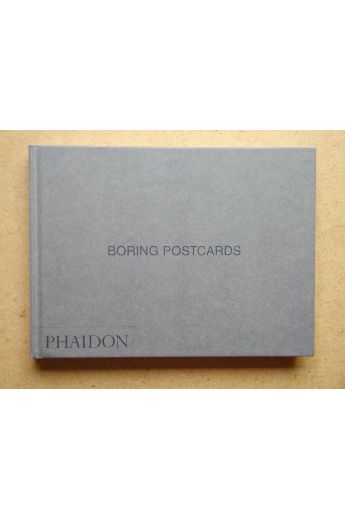 Boring Postcards USA€ 22,00
 -
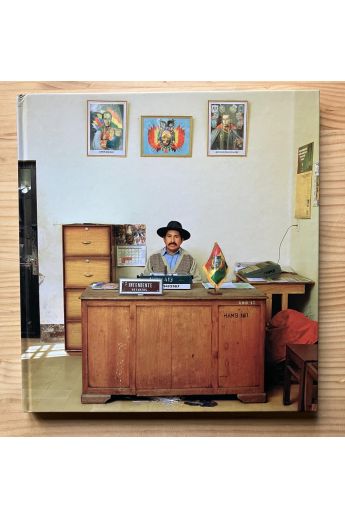 Bureaucratics€ 200,00
 -
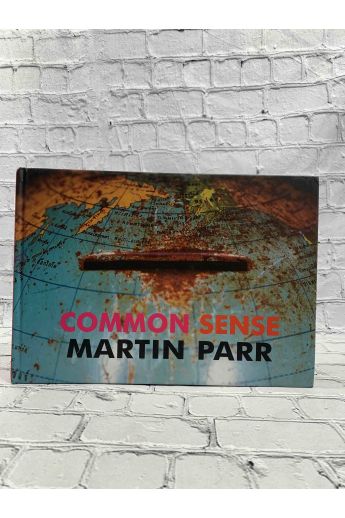 Comon Sense€ 136,00
 -
 Flowers€ 299,00
 -
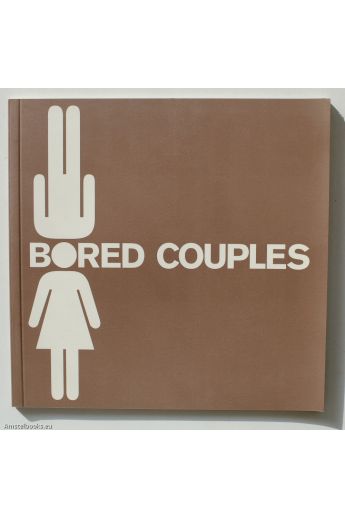 L'Ennui à deux ; Bored couples€ 600,00
 -
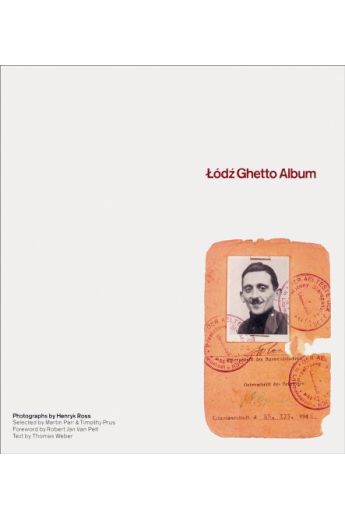 Lodz Ghetto Album€ 22,00
 -
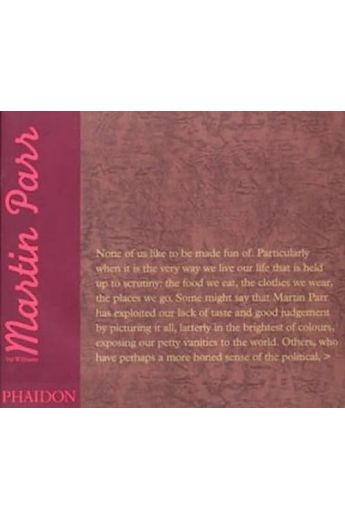 Martin Parr€ 36,00
 -
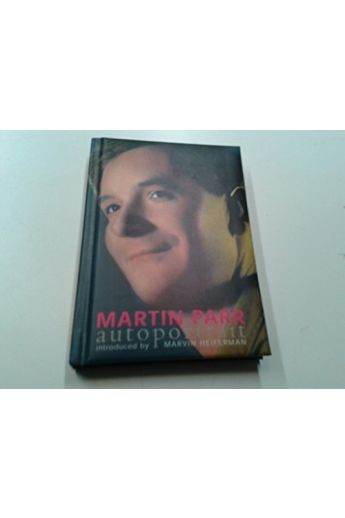 Martin Parr: Autoportrait€ 115,00
 -
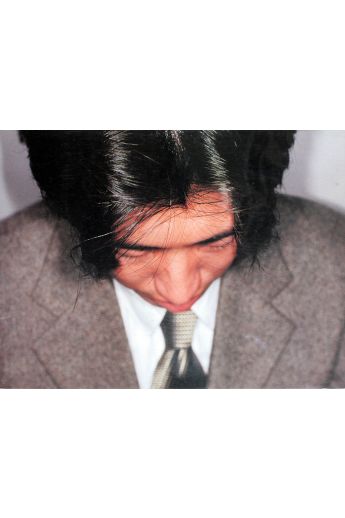 Martin Parr: Japonais Endormis€ 80,00
 -
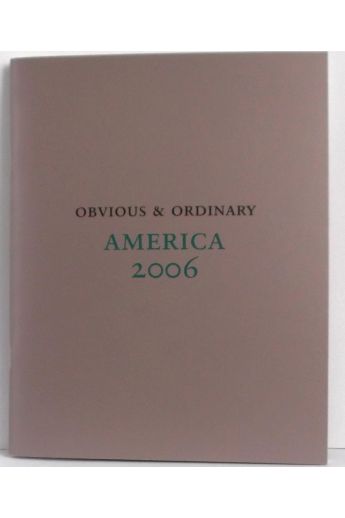 Obvious & Ordinary€ 77,00
 -
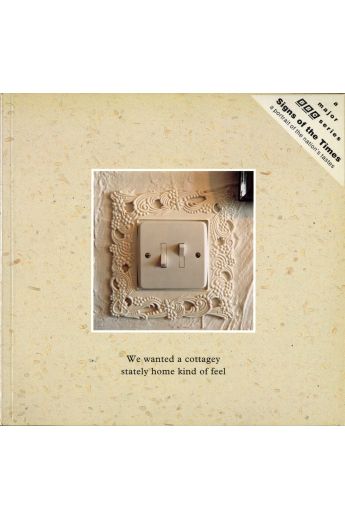 Signs of the times€ 78,00
 -
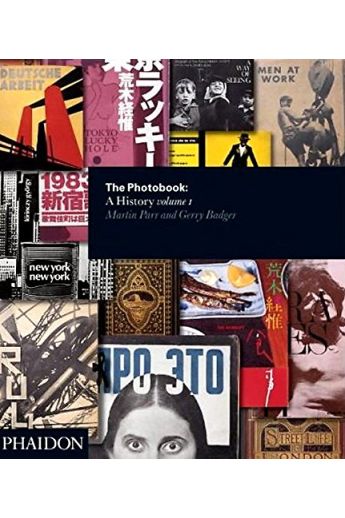 The Photobook: A History, Vol. 1€ 97,00
 -
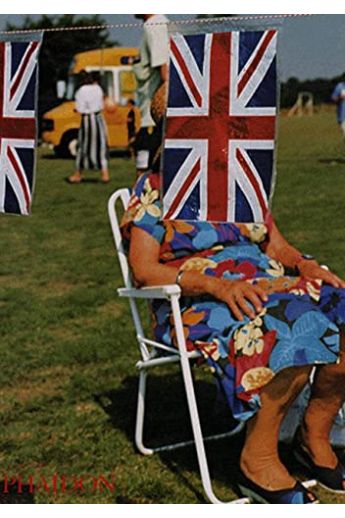 Think of England€ 220,00


Werk van Martin Parr
- 2006 The Photobook: A History, Vol. 2 Co-edited with Gerry Badger.
Referenties
- Martin Parr Biography. Tate Gallery / Wikipedia. 2025 link